

For decades, enterprise security followed a simple mental model: build a strong wall around the network, trust everything inside it, and keep the bad guys out. That model is no longer viable. Remote work, cloud-native infrastructure, a sprawling SaaS estate, and adversaries who weaponize AI have dissolved the perimeter entirely. In 2026, the defining question for security leaders is no longer whether to adopt zero trust architecture (ZTA) — it is how far along the journey they are, and whether their pace matches the speed of the threat landscape.
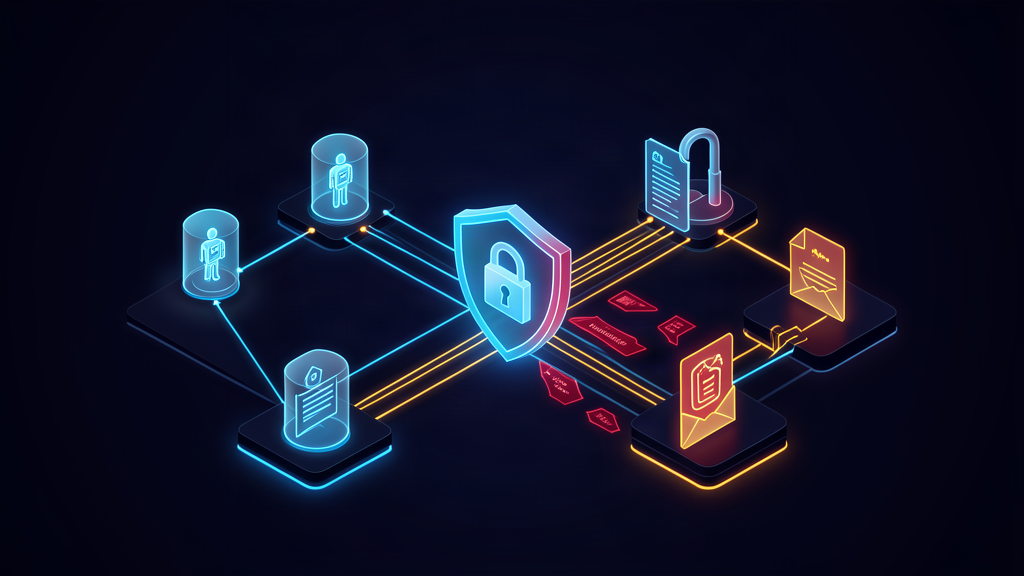
Zero trust is not a product you buy. It is an architectural philosophy that touches every layer of the technology stack, built on a single uncompromising premise: never trust, always verify. Every access request — whether it originates from inside the corporate network or from a contractor in another country — must be authenticated, authorized, and continuously validated before access is granted. There is no implicit trust based on network location, device type, or user identity alone.
Why the Perimeter Collapsed
The castle-and-moat approach worked when employees sat inside a physical office and applications lived in a data center behind a firewall. That world is gone. The average enterprise now runs more than 100 SaaS applications, connects thousands of IoT and remote devices, and operates workloads across multiple clouds. There is no meaningful perimeter left to defend.
Traditional VPN-based remote access has proven inadequate. VPNs create chokepoints that degrade performance while providing limited security visibility, and they extend implicit trust to anyone who can authenticate. Once inside, a compromised device can move laterally across a flat network, reaching sensitive systems with little resistance. This is precisely the pattern that fuels modern ransomware and supply-chain attacks, where adversaries compromise a trusted vendor or a single credential and then pivot to their real target.
The economics of the threat landscape have shifted too. Ransomware payments routinely exceed two million dollars per incident, and the average cost of a data breach continues to climb. Regulatory pressure has intensified as well. The SEC's cybersecurity disclosure rules require public companies to report material cyber incidents within four business days and to describe their risk management strategies in annual filings. Boards and executives now treat security as a governance issue, not an IT afterthought.
The Core Principles of Zero Trust
The National Institute of Standards and Technology (NIST) formalized zero trust in Special Publication 800-207, which distills the model into three core principles. First, all resources are accessed in a secure manner, regardless of network location. Second, access is granted on a per-session basis using the principle of least privilege. Third, authentication and authorization are dynamic and strictly enforced before access is allowed.
In practice, these principles translate into a set of concrete capabilities that every enterprise must build:
- Strong identity verification. Multi-factor authentication (MFA) is the baseline, with passwordless authentication using FIDO2 security keys or passkeys as the target end state.
- Microsegmentation. Instead of flat networks where any compromised device can reach any resource, workloads are isolated to limit lateral movement.
- Continuous monitoring. User and entity behavior analytics flag anomalies — a user accessing sensitive data from an unusual location at an unusual time — and trigger stepped-up verification or revocation in real time.
- Automated policy enforcement. Access decisions are made dynamically, based on context and risk, and can be revoked the moment an anomaly is detected.
- Data protection. Encryption at rest and in transit, data classification, and data loss prevention ensure that even if an attacker reaches a resource, the data itself remains protected.
The 2026 Adoption Reality
The gap between intent and execution is the defining feature of the zero trust market in 2026. According to the Cybersecurity Insiders Zero Trust Security Report, 82% of organizations view zero trust as essential to their security strategy, yet only 17% have fully implemented it. That execution gap is the opportunity — and the risk — for enterprises that have not yet committed.
The market reflects the momentum. The global zero trust architecture market reached roughly $31.8 billion in 2026 and is projected to grow to $86.4 billion by 2032, an 18% compound annual growth rate. Zero Trust Network Access (ZTNA) is growing even faster at nearly 22% CAGR, as organizations replace legacy VPNs with identity-based access. Gartner projects that by 2026, 60% of large enterprises will have implemented measurable zero trust programs, up from less than 10% in 2023.
Adoption varies sharply by industry. Financial services lead at 50%, driven by regulatory requirements and the need to protect privileged data. Government follows at 40%, propelled by NIST compliance and critical infrastructure mandates. Healthcare sits at 35%, constrained by unmanaged medical devices and care-continuity concerns. Manufacturing lags at 25%, held back by the complexity of OT/IT convergence and the fear of production downtime.
Zero Trust vs. Traditional Security: A Side-by-Side View
Understanding what changes is easier when the two models are compared directly:
- Trust model. Traditional security trusts everything inside the perimeter; zero trust trusts nothing by default and verifies every request.
- Access control. Traditional security grants broad network-level access; zero trust grants per-session, least-privilege access to specific resources.
- Identity. Traditional security authenticates once at the edge; zero trust continuously validates identity, device, and context throughout the session.
- Network design. Traditional security relies on a flat, segmented-by-firewall network; zero trust uses microsegmentation to isolate workloads and stop lateral movement.
- Threat response. Traditional security detects and contains after the fact; zero trust revokes access dynamically the moment an anomaly is detected.
- Remote access. Traditional security depends on VPNs; zero trust replaces them with ZTNA that is identity-based and cloud-native.
The shift is not merely technical. It changes how security is governed, how budgets are allocated, and how the organization thinks about risk. That is why the most common failure is trying to do everything at once.
Why Most Zero Trust Programs Stall
Zero trust is a journey, not a switch. The most common mistake is attempting a big-bang deployment across the entire estate, which overwhelms teams and stalls within months. The data confirms that execution is hard. Tool and vendor sprawl is the single largest barrier, cited by 26% of organizations, followed closely by legacy technology constraints at 24%. Budget limitations (15%), the talent and skills gap (12%), and policy ownership complexity (10%) round out the top challenges.
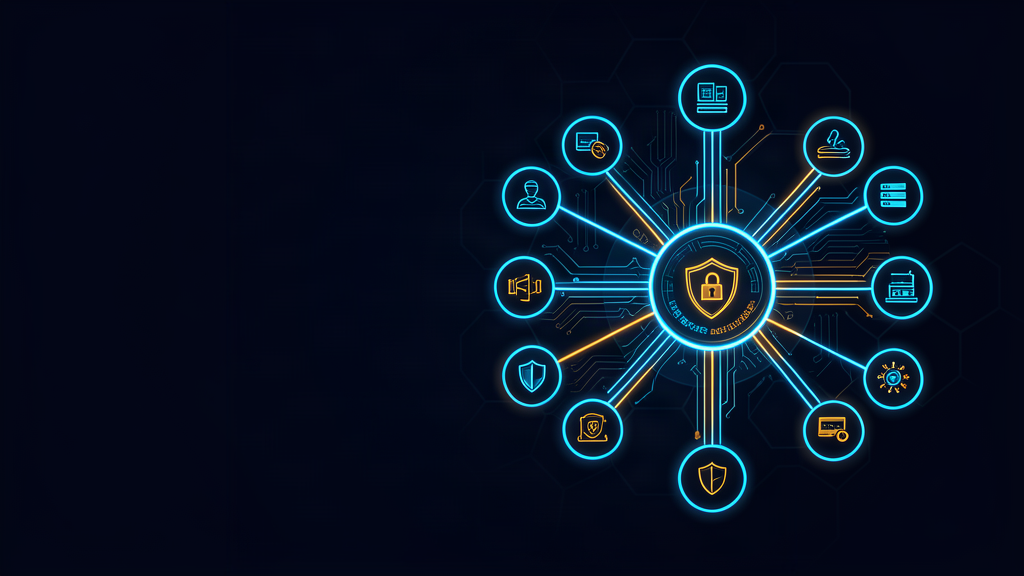
Tool sprawl deserves particular attention. 78% of organizations manage secure-access policies across more than two separate systems, creating inconsistent enforcement, duplicated effort, and slow responses when policies must adapt. The answer is not to buy more point products — it is to consolidate onto a unified architecture that enforces policy consistently across identity, network, endpoint, and data.
Another quiet failure is privilege erosion. 52% of organizations report that excessive access privileges are either very or moderately widespread. Least-privilege principles are easy to state and hard to maintain at scale. As teams grow and systems multiply, standing privileges accumulate, and every standing privilege is a standing risk.
A Phased Roadmap That Works
Successful deployments follow a phased approach that delivers value early and builds momentum. The most common and effective starting point is identity, with 78% of zero trust initiatives beginning with identity and access management modernization.
Phase One: Identity as the Foundation
Deploy a modern identity provider, enforce MFA across all applications, and implement single sign-on to reduce credential sprawl. Move toward passwordless authentication with FIDO2 security keys or passkeys. Identity is the new perimeter — if you cannot verify who is asking for access, nothing else matters.
Phase Two: Network Segmentation
Implement microsegmentation to isolate workloads and limit lateral movement. Software-defined networking makes this feasible even in complex hybrid environments. The goal is to ensure that a compromised device cannot reach sensitive resources simply by being on the network.
Phase Three: Continuous Monitoring and Adaptive Access
Move beyond static policies to dynamic, context-aware decisions. User and entity behavior analytics analyze patterns of access and flag anomalies, stepping up verification or revoking access based on real-time risk scoring. This is where zero trust becomes genuinely adaptive.
Phase Four: Data Protection
Extend zero trust to the data itself. Data loss prevention policies, encryption at rest and in transit, and data classification systems ensure that even if an attacker gains access to a resource, the data remains protected. This is the most challenging phase and often requires significant changes to how data is stored, labeled, and governed.
Measuring What Matters
Zero trust programs must be measured, or they will be abandoned. The most meaningful metrics tie security outcomes to business impact. Organizations that implement zero trust report an average reduction of $1.76 million in breach costs per incident, a 50% reduction in breach impact costs, and 43% faster breach containment times. These are not abstract benefits — they are the numbers that justify the investment to the board.
Track the metrics that matter:
- Time to contain a breach. Faster containment directly reduces cost and reputational damage.
- Lateral movement blocked. The number of attempts to move between segments that were stopped by policy.
- Privilege reduction. The percentage of standing privileges eliminated or converted to just-in-time access.
- MFA coverage. The share of applications and users protected by strong authentication.
- Policy consistency. The number of systems enforcing a single, unified access policy.
Zero Trust and the AI Era
Zero trust is not just a response to today's threats — it is the foundation for safely adopting the technologies that define 2026. AI is a double-edged sword. Attackers use AI to automate and scale attacks, generating convincing phishing, evading detection, and moving faster than human defenders. But AI is also a force multiplier for defense. 56% of organizations now use AI for threat detection, and 42% leverage it for policy automation, dynamically adjusting access and segmentation policies in response to changing risk.
For enterprises deploying AI agents and autonomous systems, zero trust becomes even more critical. Every AI agent is a new identity that must be authenticated, scoped to least privilege, and continuously monitored. The same principles that protect human users — verify identity, grant minimal access, monitor behavior, revoke on anomaly — must be extended to machine identities. An agent with excessive privileges is a standing risk, exactly like a human with excessive privileges.
The Bottom Line
Zero trust is no longer a forward-thinking strategy. In 2026 it is a baseline requirement for any enterprise that handles sensitive data, operates in a regulated industry, or relies on cloud and remote work. The question for CISOs is not whether to adopt it, but how far along they are — and whether their pace of adoption matches the pace of the threat landscape.
The path forward is clear: start with identity, segment the network, monitor continuously, and protect the data. Consolidate tools rather than accumulating them. Measure outcomes rather than activity. And treat zero trust as an architectural philosophy that touches every layer of the stack, not a product to be purchased.
Enterprises that close the execution gap will not only reduce breach costs and contain incidents faster — they will build the trust and resilience that customers, partners, and regulators increasingly demand. In a perimeterless world, the only reliable defense is one that assumes breach and verifies everything. That is the promise of zero trust, and it is within reach for organizations willing to start the journey.
Ready to build a zero trust architecture that fits your enterprise? Contact Tech Hub Services at info@techhubservices.com or +1-416-477-6087 to discuss a security roadmap tailored to your environment.