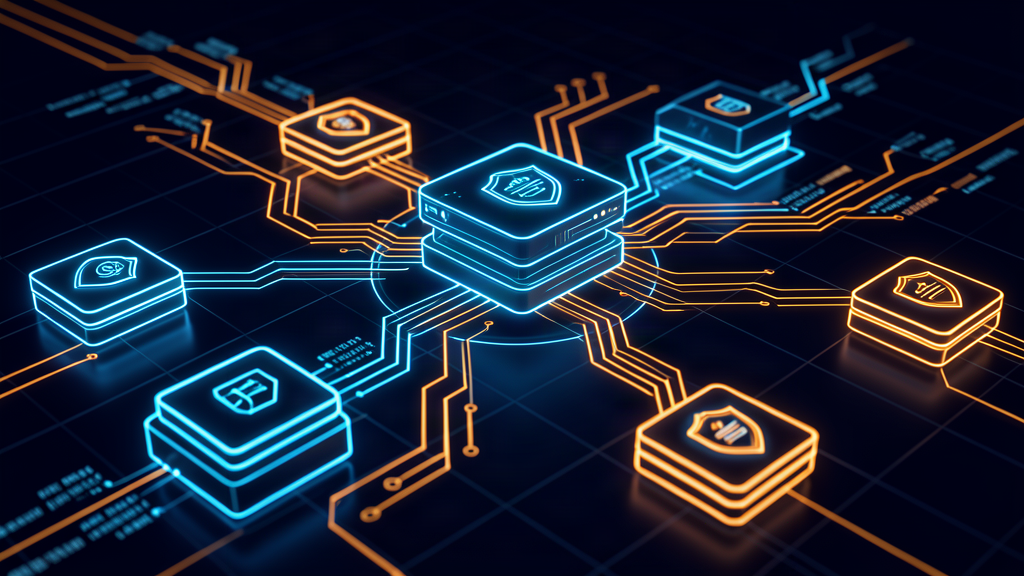

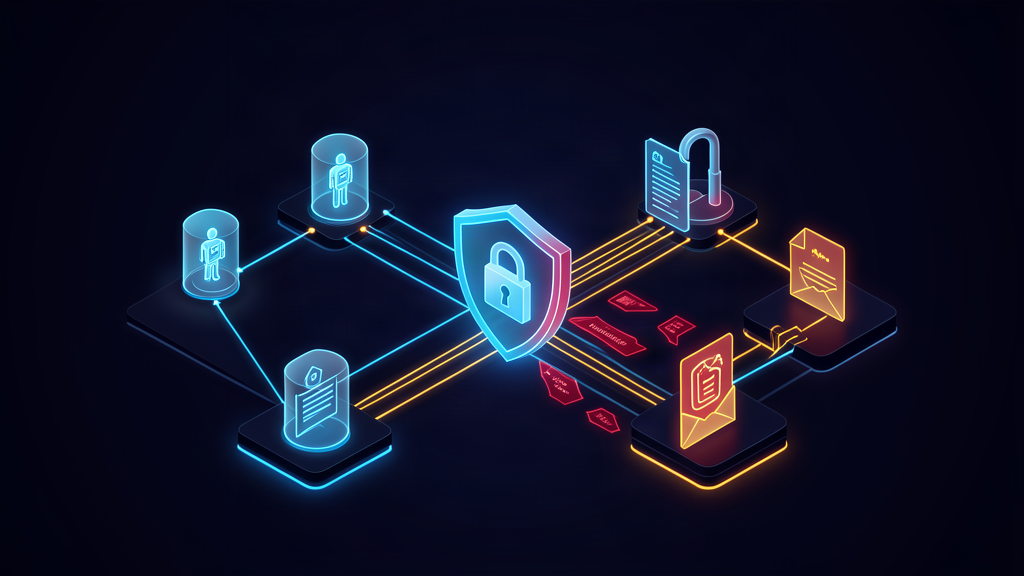
Enterprise AI agents stopped being experiments sometime in the last eighteen months. They now read your email, query your data warehouse, open pull requests, reconcile invoices, and answer customer tickets without a human approving each step. That shift delivered real productivity — and it quietly created a vulnerability class that most security programs are still not equipped to handle: indirect prompt injection.
Unlike the jailbreaks that made headlines in 2024, indirect prompt injection does not require an attacker to talk to your AI system. It requires the attacker to plant text somewhere your agent will eventually read — a web page, a support ticket, a shared document, a calendar invite, a code comment, a product review, or a poisoned entry in a retrieval-augmented generation (RAG) knowledge base. When the agent processes that content, the instructions inside it compete with your system prompt for control of the model's next action. If the agent is over-privileged, the attacker gets a foothold inside your enterprise without ever authenticating.
Why Indirect Prompt Injection Became the Defining Enterprise Risk of 2026
Two things changed at once. First, agents got tools. Second, agents got exposed to untrusted content by design — that is the entire point of using them. A coding assistant must read your repositories and issue trackers. A sales agent must read inbound email. A research agent must browse the web. Every one of those inputs is attacker-reachable.
The security community's assessment caught up quickly. In the 2026 revision of the OWASP Top 10 for LLM Applications, prompt injection remained the number one risk (LLM01), while excessive agency jumped from sixth place to third (LLM03) — the largest single move on the list. That ranking was not driven by expert opinion alone. For the first time, OWASP weighted its results partly on catalogued incident data, and the incidents clustered around a single pattern: a system where model output triggers real action, with permissions that are far broader than the task requires.
Independent telemetry painted the same picture. Through early 2026, researchers documented live, in-the-wild indirect prompt injection campaigns seeding the open web with hidden instructions aimed at browsing agents, coding assistants, and enterprise copilots. Palo Alto Networks Unit 42 catalogued a series of detected IPI cases against AI agents in production. Meanwhile, surveys of enterprises running agents reported that the large majority experienced at least one AI-related security incident during the year, even as confidence in their own controls remained high. The gap between confidence and incident rate is the whole story: teams believe their guardrails work because the agent still functions, not because they have proven it resists a determined attacker.
What Makes Indirect Prompt Injection Different
The collapse of the instruction/data boundary
Classical software has a clean separation between code and data. A SQL parameter is never executed. A templated value is never treated as a directive. Large language models have no such boundary. Every token in the context window — your system prompt, the user's request, the document the agent fetched, the HTML comment it scraped — is processed by the same machinery and interpreted as potentially instructional.
That is why the standard mitigations feel unsatisfying. You cannot escape or sanitize your way out of the problem the way you encode output to stop cross-site scripting, because there is no syntactic marker that reliably distinguishes an instruction from data. Text that looks like ordinary prose to a human can read as a command to a model.
Real-world attack chains
The documented attack patterns follow a consistent shape:
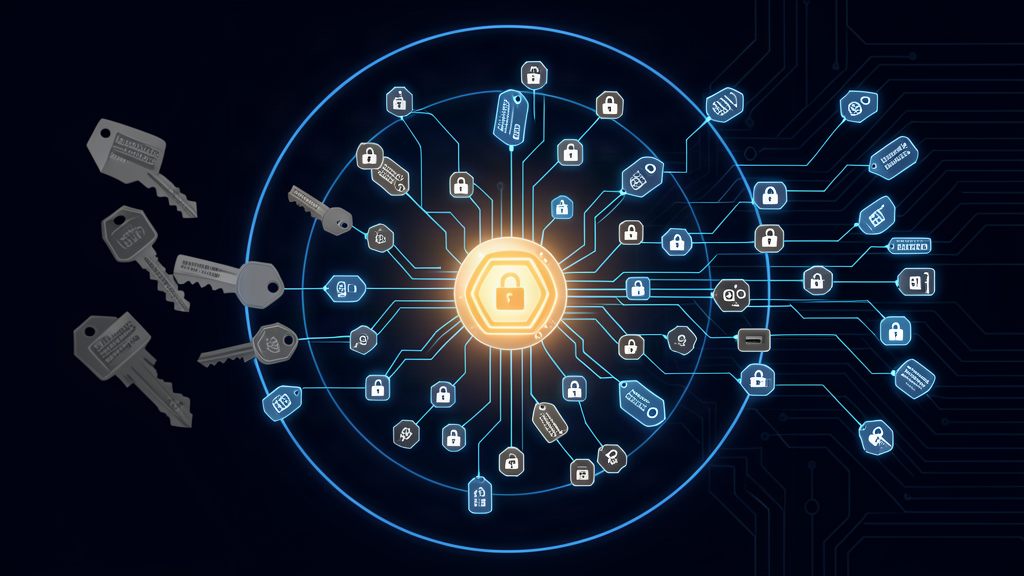
- Silent exfiltration. An injected instruction tells the agent to collect sensitive context and encode it into an outbound request — a tracking-pixel URL, a markdown image link, a benign-looking API call, or a message to an external service. The user sees a normal task complete; the data is already gone.
- Tool-call hijacking. The agent is steered into invoking a tool it has access to but was never supposed to use for this task — deleting a record, transferring funds, granting access, or pivoting to a more privileged system.
- Poisoned knowledge bases. A single malicious document ingested into a RAG corpus can influence every future answer that retrieves it, turning a one-time injection into a persistent backdoor.
- Supply-chain injection. Third-party components, plugins, and MCP servers extend the agent's reach — and its attack surface. A compromised integration becomes an insider with AI-mediated access to your systems.
The Lethal Trifecta: The Three Ingredients of an Agent Breach
Security researcher Simon Willison gave the industry its most useful mental model for this problem. An agent becomes dangerously exploitable when it combines three capabilities at once:
- Access to private data — customer records, source code, internal documents, credentials.
- Exposure to untrusted content — any text or image whose wording an attacker can influence.
- The ability to communicate externally — any channel that can carry data out, including HTTP requests, emails, and even a link the user is invited to click.
Any one of these is manageable. All three together are the recipe for a breach. Crucially, detection alone does not close the trifecta, because injected instructions have no reliable signature. The durable fix is to ensure the three ingredients are never all present in a single session — an approach Meta formalized as the Agents Rule of Two: within one session, an agent should satisfy no more than two of the three properties. If a task genuinely requires all three, you split it into stages with a human checkpoint or a policy control between them.
A Defense-in-Depth Blueprint for Enterprise AI Agents
Because no filter reliably stops prompt injection, mature programs assume injection will sometimes succeed and design so that a compromised agent cannot do catastrophic damage. The controls below stack; each one shrinks the blast radius the others leave behind.
1. Maintain an agent identity registry
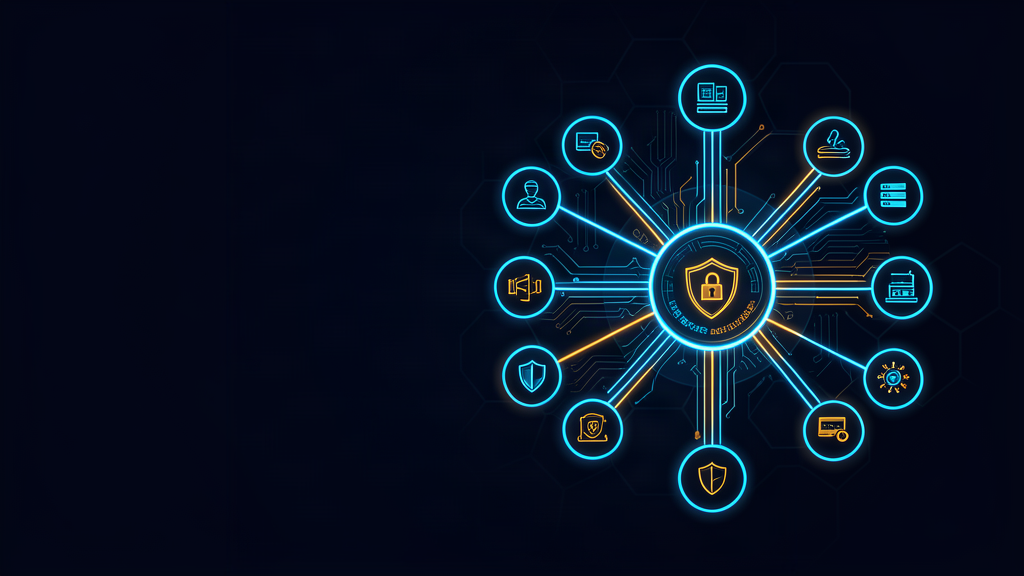
You cannot secure agents you do not know exist. Inventory every agent across engineering, operations, and business teams, and map each one to its purpose, its authorized tools, its data scope, and a named human owner. In multi-agent systems, each agent should authenticate to the others with its own verifiable credentials — implicit trust inside a shared environment is exactly how cascading failures begin. Give each agent role a dedicated service identity rather than a shared credential, and scope any cross-agent interface to task context and structured data, never raw credential bundles.
2. Enforce least privilege at the tool layer
This is the single highest-leverage control. The classic failure pattern is a generic tool with broad downstream permissions: an agent handed a full database connection to answer ad-hoc questions is one injection away from dropping a table. Replace generic tools with narrowly scoped, purpose-built ones. If an agent only needs to read, its credential should not be able to write. Use short-lived, task-scoped tokens that expire when the operation ends instead of persistent, over-scoped service accounts. Default-deny tool access: agents should not even see capabilities they have no business using.
3. Apply the Rule of Two and separate duties
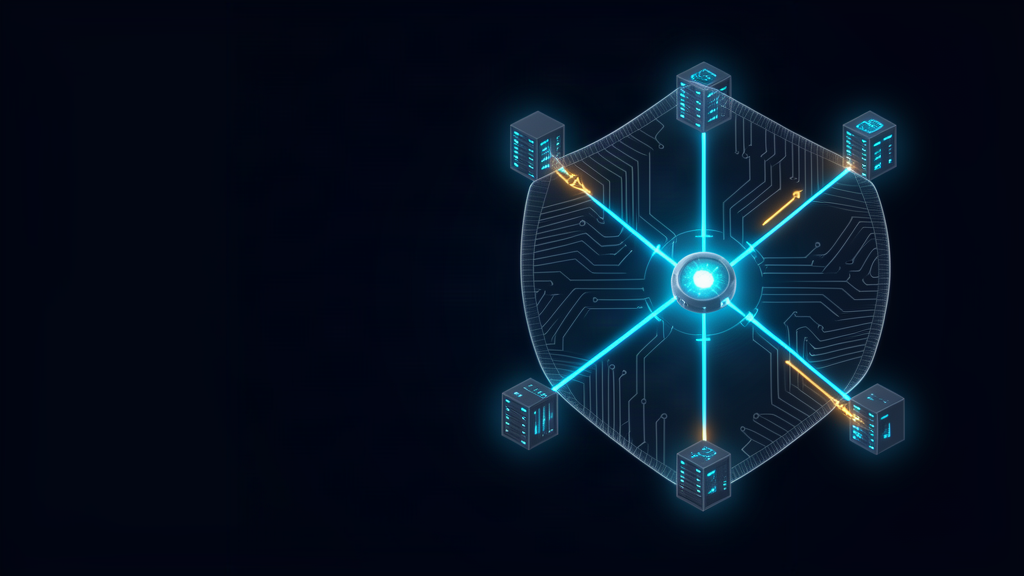
Architect agents so that no single session holds private data, untrusted input, and an external channel simultaneously. Where that is impossible, insert a control plane between the reasoning step and the acting step — an intermediate permission broker that evaluates every high-risk tool call against policy before it executes. This is policy-as-code applied to agent actions, and it is the difference between an agent that can be manipulated and an agent that can be manipulated into doing real harm.
4. Sandbox and isolate execution
Never let model output execute directly in your environment. Treat every model response as hostile input: no indiscriminate code execution, no unsanitized shell commands, no dynamic evaluation. Run agent-produced code and file operations inside isolated containers, micro-VMs, or WebAssembly sandboxes with strict filesystem and network boundaries. Enforce egress restrictions so that even a successfully hijacked agent has nowhere to send stolen data.
5. Treat outputs as untrusted, everywhere
Improper output handling remains a top-ten LLM risk precisely because teams trust the model's output more than any other input. Anything the model generates that touches a downstream system — a SQL query, an HTML fragment, a shell command, a URL — must be validated and encoded for that destination, exactly as you would treat a user-submitted form field. Filter what comes out, not just what goes in.
6. Put a human in the loop for irreversible actions
Prompt injection can redirect an agent, but it cannot argue with an approval dialog. Require explicit human authorization for high-impact, non-reversible operations: payments, credential changes, mass deletions, production deployments, outbound emails to external parties, and any action that changes access control. The goal is not to slow down routine automation — it is to make sure the one action an attacker needs your agent to perform always crosses a boundary a person controls.
7. Instrument everything with tamper-evident, comprehensive logging
Without a trace, there is no forensics and no detection. Log every tool call with who triggered it, which tool was invoked, the exact parameters passed, the response received, which policy rules were evaluated, and the final allow-or-deny decision. Redact secrets from structured logs at the source — do not rely on the agent to redact itself, because tool-call arguments are frequently written verbatim and a credential passed to a connection tool ends up in a plaintext file. Store agent action logs immutably and retain them for as long as your regulatory obligations require.
8. Test agents adversarially in CI
Security claims that are never measured are marketing. Before an agent reaches production, run an adversarial evaluation suite against it covering direct and indirect injection, poisoned documents and emails, RAG-corpus poisoning, and markdown-based exfiltration attempts. Then keep running it as part of continuous integration so a prompt or tool change that quietly reopens a hole fails the build. Track agent behavior against a baseline and alert on anomalies across sessions — a sudden increase in outbound requests or an unusual tool sequence is often the first visible sign of a live injection.
Governance Is the Control Plane Enterprises Forget
Technology alone does not close this gap. The 2026 incident record shows that the majority of AI-related security failures trace back to misconfiguration, excessive agency, and weak governance rather than exotic model exploits. That means the foundational controls matter more than the sophisticated ones: sanctioned-agent policies so employees are not quietly wiring unsanctioned agents into production systems, change management for prompts and tool definitions, clear ownership and accountability for every deployed agent, and a documented posture on what agents are permitted to do autonomously versus what always requires human sign-off.
Deploying an agent on top of a broken process simply produces a faster broken process — and a faster path to data loss. The organizations that get agentic AI right treat process redesign and governance as part of the deployment, not an afterthought once something goes wrong.
What This Means for Your 2026 Roadmap
Indirect prompt injection is not a problem you will eliminate with a better model or a single vendor feature. It is a systems problem with a systems answer: reduce what each agent can reach, isolate what it can execute, constrain where it can send data, log everything it does, and keep a human on the actions that cannot be undone. Do that, and a successful injection becomes an inconvenience your monitoring catches — not a breach your legal team explains.
The teams shipping agents fastest in 2026 are not the ones with the most permissive automation. They are the ones who designed least privilege, isolation, and observability into the agent layer from the first day, and who can prove it with an audit trail rather than an assertion.
Tech Hub Services helps enterprises design, build, and harden AI agent systems — from secure architecture and least-privilege tool scoping to adversarial testing, observability, and governance frameworks that hold up under scrutiny. If you are putting agents into production and want to know how much damage a successful injection could actually do, let's talk.