

Enterprise API Security in 2026: Why Authorization Is Still the Weakest Link
Every modern enterprise runs on APIs. They move money, expose customer records, connect partner systems, and increasingly serve as the control surface for AI agents that act on your behalf. Yet after a decade of tooling, frameworks, and guidance, the same foundational failures keep showing up in real-world breaches. The 2026 State of API Security research from 42Crunch reaches an uncomfortable conclusion: attackers are not winning with exotic zero-days. They are winning because authorization checks are missing, inconsistent, or enforced in the wrong layer of the stack.
This matters more now than it did three years ago. APIs are no longer just integration points between systems — they are the connective tissue that lets autonomous processes read, write, and decide at machine speed. A logic flaw that once leaked a handful of records during a manual exploit can now be hammered thousands of times per minute by an automated process that never gets tired. Scaling AI without first fixing API security is not digital transformation; it is accelerating your risk.
Why APIs Became the Center of Enterprise Risk
The shift happened quietly. As organizations decomposed monoliths into services and pushed functionality to the edge, the number of exposed endpoints multiplied. A single application that once had a handful of routes now fronts hundreds of endpoints across internal services, partner integrations, mobile backends, and public developer portals. Each endpoint supports multiple HTTP methods, each method touches different resources, and each resource demands different permissions depending on context.
That complexity compounds every quarter. New versions ship faster than old ones retire. Documentation lags behind deployment. The result is an attack surface that grows faster than the teams responsible for securing it. Perimeter defenses — firewalls, WAFs, and network segmentation — do not help much here, because API attacks look like legitimate traffic. They arrive authenticated, well-formed, and aimed at endpoints you deliberately exposed.
The Authorization Problem Nobody Fixed
Authorization-related flaws dominate the threat landscape, and by a wide margin. In the 2026 dataset, Broken Object Level Authorization (BOLA) represented the single largest category of reported API vulnerabilities, with Broken Function Level Authorization (BFLA) close behind. Together with authentication bypass techniques, they account for the overwhelming majority of findings.
Broken Object Level Authorization (BOLA)
BOLA is deceptively simple. An endpoint accepts an identifier — an account number, an order ID, a file reference — and returns the associated object without verifying that the caller actually owns it. Change /api/orders/1042 to /api/orders/1043 and a legitimate, fully authenticated request returns someone else's data. There is no exploit payload, no malformed input, nothing a signature-based defense would catch.
The fix is a per-object authorization check on every endpoint, applied at the data layer rather than the UI. If your application hides a record from a user in the interface but the API happily serves it, you have not implemented authorization — you have implemented decoration.
Broken Function Level Authorization (BFLA)
BFLA is the sibling failure at the function level. A privileged operation — resetting a password, exporting a full dataset, toggling a feature flag — is exposed to roles that should never reach it. The 2026 research cites a striking real-world case: a sensitive password backup function, hidden behind admin controls in the user interface, was directly accessible to non-admin users through the API. The UI enforced the rule; the API ignored it.
The mitigation is role checks on every endpoint with a default-deny posture. Privileged functions should sit behind isolated routes, separate rate limits, and often separate services entirely, so that a single weak integration cannot reach them.
Authentication Still Isn't Solved
It is tempting to assume authentication is a solved problem. It is not. The 2026 findings document recurring failures that would be unremarkable in a textbook but remain endemic in production: sensitive endpoints with no authentication at all, JWTs validated without signature verification or expiry enforcement, and authentication bypasses achieved through header or path manipulation.
The common thread is velocity. APIs are developed, deployed, and modified faster than security reviews can keep pace. In organizations running hundreds or thousands of endpoints, gaps are not a sign of incompetence — they are an inevitable consequence of manual review applied to machine-scale change. That is precisely why automation and policy enforcement at the gateway matter more than heroic individual diligence.
Unrestricted Resource Consumption and the Rate-Limiting Gap
Rate limiting is often framed as a security control, but for most businesses it is an availability and cost control first. OWASP treats unrestricted resource consumption as a core API weakness, and the consequences are tangible: brute-force login attempts, credential stuffing, automated enumeration of customer records, and denial-of-service at the application layer.
Practical enforcement means limits that are per client, per endpoint, and per business flow — not a single global threshold. Login, search, export, and partner integration endpoints each deserve their own ceilings. Return 429 status codes with Retry-After headers, apply exponential backoff to repeated failures, and cap payload sizes so that a single request cannot exhaust memory. In 2026 the leading edge has moved toward behavioral rate limiting: if a client that normally makes ten calls a day suddenly issues a thousand a minute from an unfamiliar network, dynamic throttling should engage automatically.
Inventory: Zombie, Shadow, and Deprecated APIs
Improper inventory management is a uniquely API-shaped risk. When teams deploy frequently without a disciplined decommission strategy, forgotten endpoints accumulate. Old versions linger after new ones ship, undocumented routes slip through review, and shadow APIs appear wherever a department stands up an integration without telling anyone.
Attackers know this. The first thing an adversary does upon seeing /v3 is try /v1, betting that the security controls added to the current version were never back-ported. Often they are right. A complete API inventory — with environment stage, data flows, protection mechanisms, CORS policy, and rate limits documented for each entry — is the minimum viable foundation. You cannot secure what you cannot see.
The AI Multiplier: Why Agentic Systems Change the Math
AI has fundamentally altered the API risk model, and not in a subtle way. Traditional API consumers follow predictable patterns defined by developers. AI systems, especially agentic ones, behave differently:
- They make decisions autonomously, chaining calls across systems without a human in the loop.
- They operate at machine speed, retrying and exploring far faster than any manual tester.
- They frequently access APIs that were never designed for non-human actors.
- They inherit delegated authority, which means a single over-scoped token can unlock far more than intended.
A broken authorization check that once exposed limited data now becomes a systematically exploitable resource. OWASP responded by publishing a dedicated Top 10 for Agentic Applications, addressing risks like goal hijacking and insecure inter-agent communication. But those agent-specific risks sit on top of API fundamentals. If your API authorization is broken, no amount of agent-level governance will save you.
A Practical API Security Framework for 2026
The research converges on a clear set of priorities. Treated as a sequence, they form a workable roadmap for any enterprise — regardless of whether AI is on the immediate horizon.
1. Build and maintain a complete inventory
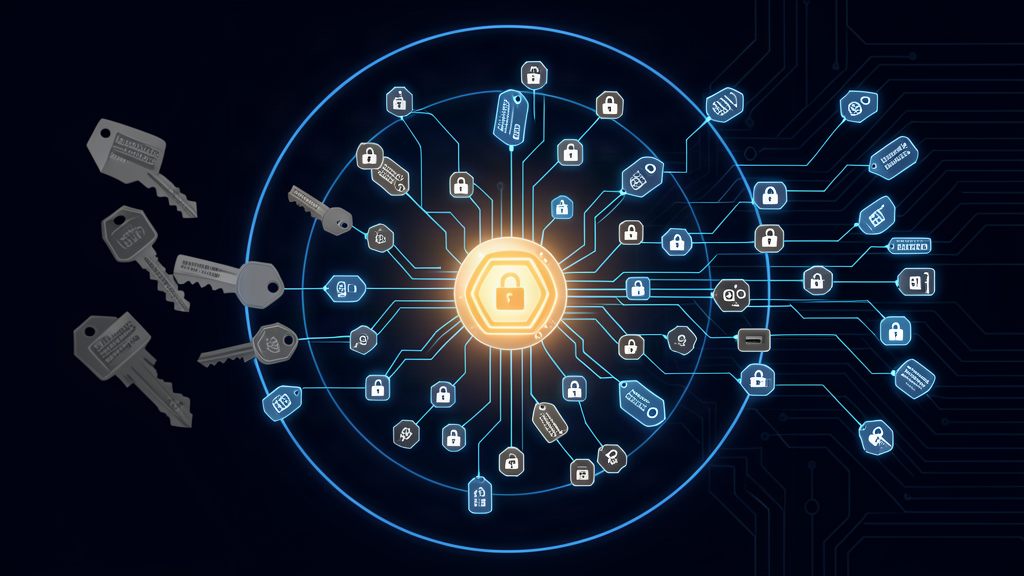
Discover every endpoint, document its stage and data flows, and retire deprecated versions aggressively. An API catalog is not paperwork; it is the scope definition for everything that follows.
2. Enforce authorization per object and per function
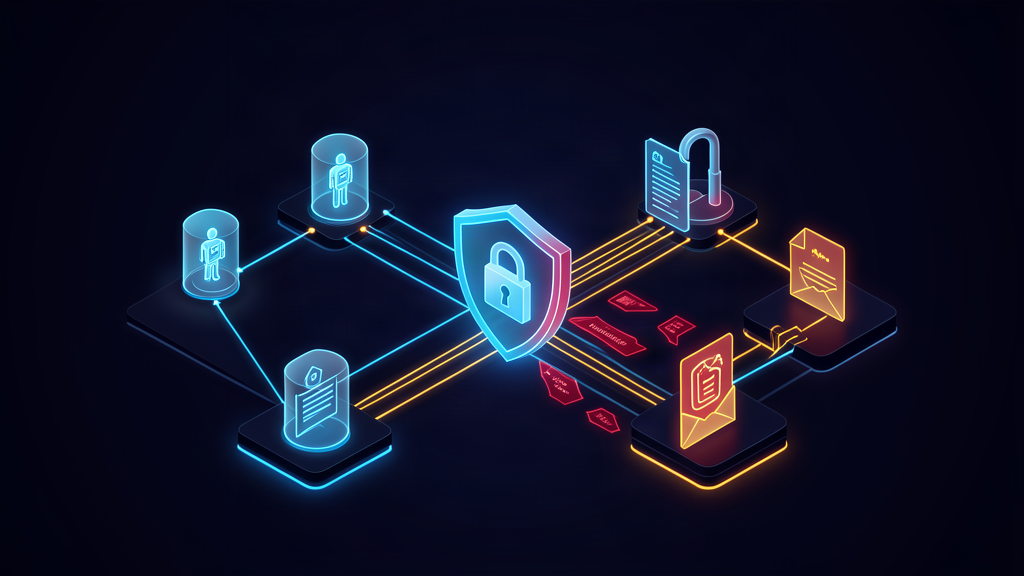
Check ownership on every object reference and role on every function. Default to deny. Move the decision to the data layer so the UI and the API can never disagree about who is allowed to do what.
3. Harden authentication
Use an established identity provider, sign and validate tokens with short lifetimes, and prefer mutual TLS for service-to-service communication. Treat every internal API as though it were public.
4. Rate limit and quota everything
Apply per-client, per-endpoint, and per-business-flow ceilings. Add bot detection on sensitive flows and require step-up authentication for high-risk operations.
5. Validate input and schema rigorously
Enforce request and response schemas against your OpenAPI contract, and reject unknown fields by default. Treat data from third-party APIs as untrusted — validate every response as carefully as you validate user input.
6. Shift security left and monitor at runtime
Integrate API testing into CI/CD so flaws are caught before deployment, then maintain runtime visibility to catch what slips through. Security-by-design prevents far more damage than reactive detection.
What This Means for SMBs and Mid-Market Enterprises
It is tempting to read a report about enterprise API risk and conclude it does not apply to a smaller organization. That reading is wrong. SMBs and mid-market businesses are often more exposed precisely because they have fewer dedicated security resources. A single integration that powers an e-commerce checkout, a booking flow, or a customer portal is enough to expose sensitive data if its authorization logic is weak.
For Canadian businesses subject to privacy regulation, there is an additional dimension. Demonstrating that you took reasonable steps to protect customer data — through documented controls, defensible architecture, and evidence of due diligence — is often as important as the technical fix itself. Rate limiting, inventory management, and per-object authorization are not just engineering hygiene; they are compliance artifacts.
The Bottom Line
The 2026 API security picture is not a story of novel threats. It is a story of well-known weaknesses finally meeting a threat environment that exploits them at scale. APIs have moved from integration detail to control surface, and the organizations that will succeed are those that treat them as governed, enforceable assets across their entire lifecycle — not as plumbing to be secured later.
Authorization must become a first-class design concern rather than an afterthought bolted onto the interface. Manual reviews do not scale to modern API ecosystems, so automation and policy enforcement are essential. And APIs are now part of your AI attack surface whether you intend them to be or not.
Fixing API security basics is no longer optional. It is the prerequisite for safely scaling anything that comes next.
How Tech Hub Services Can Help
Tech Hub Services helps enterprises across the Greater Toronto Area and beyond secure the software that runs their business. Our teams review API architectures for authorization gaps, implement rate limiting and gateway policy, integrate security testing into CI/CD pipelines, and build the documentation and inventory discipline that turns a sprawling endpoint estate into a manageable, defensible asset.
Whether you are modernizing a legacy integration layer, preparing for an AI initiative, or simply need an honest assessment of where your APIs are exposed, we can help you find the gaps before an attacker does. Reach out to schedule a security review and get a clear, prioritized view of your API risk.