
Why Headless & Composable Commerce Is the Enterprise Standard in 2026
For years, enterprise e-commerce ran on a simple promise: one platform, one stack, one way of doing things. A monolithic system handled your storefront, your checkout, your content, and your integrations in a single tightly-coupled package. It worked — until it didn't. As customer expectations exploded across channels, devices, and AI assistants, that all-in-one approach became a bottleneck rather than an advantage.
In 2026, the conversation has shifted decisively. Headless and composable commerce have moved from experimental architecture to the default standard for serious digital businesses. The global headless commerce market is projected to reach $1.74 billion in 2025, growing at a compound annual rate of 23.7%. More tellingly, roughly 64% of enterprise e-commerce organizations are now using or planning to use headless commerce, and 92% of US brands have adopted some form of modular, API-driven system. This isn't a niche trend — it's the new baseline.
At Tech Hub Services, we help enterprise software, e-commerce, and SEO clients navigate exactly this transition. This guide breaks down what headless and composable commerce actually mean, why they matter in 2026, and how to adopt them without betting the business on a risky replatform.
What Headless and Composable Commerce Actually Mean
Before diving into strategy, it's worth being precise about the terms, because they're often used interchangeably — and the distinction matters for planning.
Headless Commerce
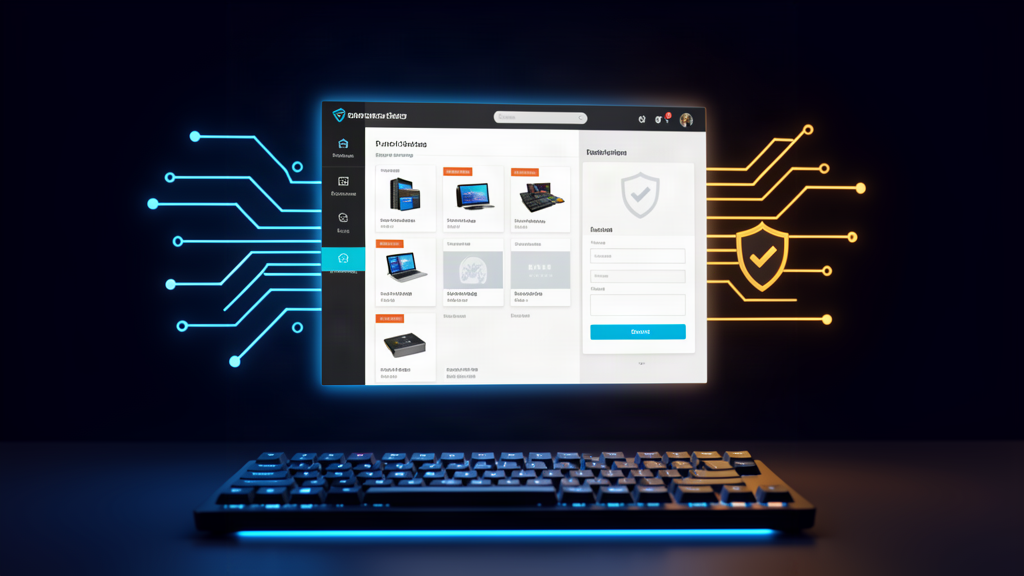
Headless commerce separates the frontend (the customer-facing storefront) from the backend (the commerce engine that handles products, carts, pricing, and orders). The two communicate through APIs rather than being welded together. This decoupling gives brands complete freedom over the customer experience — the design, the content, the interactions — without being constrained by the limitations of a rigid platform template.
Composable Commerce
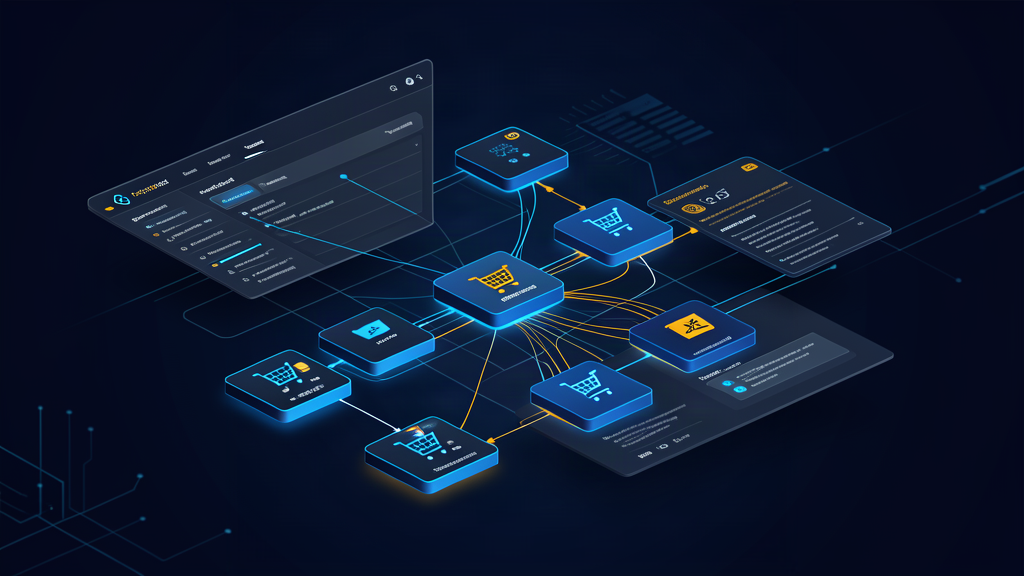
Composable commerce takes headless one step further. Instead of choosing one platform for everything, you assemble your ideal stack from specialized, interchangeable components — a best-in-class search engine, a dedicated checkout system, a headless CMS, a separate order management tool — all connected through APIs. The MACH Alliance principles (Microservices, API-first, Cloud-native, Headless) define this approach. Think of it as building with modular blocks rather than buying a single pre-fabricated structure.
The practical difference: headless is about decoupling your frontend from your backend. Composable is about decoupling everything from everything, so each piece can scale, innovate, and be replaced independently.
Why the Monolith Is Failing Enterprise Retailers
Monolithic platforms aren't bad software. They're just structurally limited in ways that compound as a business grows. Here's what happens when an enterprise outgrows its all-in-one stack:
- Scaling bottlenecks. In a monolith, a traffic spike on your storefront strains your entire system. You can't scale the checkout independently of the content layer, so you over-provision everything to handle peak load.
- Slow innovation. Every new feature — a new payment method, a new channel, a new personalization engine — requires touching the whole system. Feature releases become quarterly events instead of continuous improvements.
- Vendor lock-in. Your roadmap is dictated by the platform's roadmap. If the vendor doesn't prioritize the integration you need, you're stuck waiting or building fragile workarounds.
- Channel fragmentation. Modern customers move seamlessly between Instagram, your website, and in-store pickup. A monolith struggles to deliver a consistent experience across all of them because content and commerce are locked together.
These aren't theoretical problems. They're the day-to-day reality for retailers trying to compete in a market where customer expectations reset every few months.
The 2026 Trends Reshaping Enterprise Commerce
Several forces are converging to make headless and composable architecture not just attractive, but necessary. Here are the trends that matter most for enterprise decision-makers.
1. Agentic Commerce Is Moving From Demo to Production
AI agents that browse, compare, and buy products on behalf of users are now in production. OpenAI's ChatGPT agent mode, Perplexity Shopping, and Amazon's Rufus all shipped shopping capabilities through 2025 and into 2026. These agents don't click through traditional funnels. They scan structured data, compare specifications, and check out through APIs. If your checkout requires a human to fill three forms across two pages, agents won't make it through. Headless architecture — with clean, structured product feeds and API-driven checkout — is what makes your store accessible to this new class of buyer.
2. Answer Engine Optimization Replaces Classic Product SEO
Search behavior has fundamentally changed. High-intent product queries increasingly end inside AI Overviews and answer boxes rather than on product detail pages. Salsify's 2026 consumer research shows AI tools are among the fastest-growing product research channels for US shoppers. The fix isn't writing more content — it's writing content that answers questions directly, with structured data, FAQ schema, and short definitional paragraphs that AI systems can parse and cite. This is a structural shift, not a tactical tweak.
3. Generative Engine Optimization (GEO) Determines AI Visibility
GEO is what determines whether AI systems cite your brand when someone asks "best CRM for enterprise" or "most reliable e-commerce platform." The signals differ from traditional SEO: brand mentions across trusted sources, structured content density, and citation patterns the models actually trust. Mid-market and enterprise brands are getting boxed out of AI citations because they haven't built a citation footprint. The response is a deliberate program of authoritative, structured, citable content — not just more blog posts on your own domain.
4. Google's AI Overview Is Eating Top-Funnel Traffic
Search "best running shoes for flat feet" in 2023 and you'd see ten organic listings. The same search today shows an AI Overview that answers the question, three product cards, and the first organic listing pushed below the fold. Top-of-funnel click-through rates are dropping even when rankings hold. The response isn't to abandon SEO — it's to write content AI Overview will quote, with verifiable citations and structured data it can parse. For e-commerce brands, this means rethinking how product and category pages are structured.
5. Composable Commerce Is Now a Mid-Market Decision
Composable commerce used to mean a six-figure replatform and a year of engineering. In 2026, platforms like BigCommerce Catalyst, Shopify Hydrogen, and Adobe Commerce's modular stack have brought it down to mid-market budgets. It's worth it when you have $5M+ in revenue, omnichannel needs, custom UX requirements, or international expansion. It's worth skipping when you're below that threshold, in a stable category, or lack engineering bandwidth. The key is knowing which side of that line you're on.
6. AI Personalization Drives Measurable Revenue
Real-time behavioral analysis and dynamic content adaptation are delivering results that broad segmentation never could. AI-driven personalization has been shown to boost conversions by up to 369% in some implementations, and brands report 40% more revenue from personalized experiences. The catch: personalization at this level requires a unified data layer — synchronized inventory, pricing, and customer data across every touchpoint. That's exactly what headless architecture enables.
7. Edge Performance Directly Impacts Conversion
Every one-second improvement in page load time increases conversions by roughly 2%. Edge computing — processing data closer to the user — reduces latency and speeds page loads, which improves both the customer experience and Core Web Vitals scores. This matters more than ever under mobile-first indexing, where Google evaluates your site's mobile performance as the primary ranking signal.
How to Adopt Headless Without a Risky Replatform
The biggest mistake we see in enterprise adoption is the attempt to rebuild everything at once. A full replatform is expensive, risky, and often unnecessary. The smarter path is incremental and targeted.
Start With a Single Pain Point
Identify the one bottleneck hurting you most — whether it's checkout performance, content velocity, or search relevance — and replace just that component. Keep the rest of your legacy system running while you prove the new architecture works. This phased approach de-risks the transition and builds internal confidence.
Invest in a Unified Data Layer
Before you can personalize, orchestrate, or scale, you need clean, synchronized data. A unified data layer that syncs inventory, pricing, and customer information across all channels is the foundation everything else depends on. Without it, headless is just a faster way to deliver inconsistent experiences.
Prioritize Structured Data and Content Hygiene
AI agents, answer engines, and generative engines all depend on structured, parseable content. Clean product feeds, FAQ schema, and definitional content above the fold do most of the work. This is where SEO and architecture converge — the same structured data that helps AI systems cite you also improves your organic visibility.
Choose Best-of-Breed, Not Best-of-Everything
Resist the temptation to pick one vendor for everything. The value of composable architecture is choosing the best tool for each function — a headless CMS for content, a dedicated search engine for discovery, a specialized checkout for conversion. Evaluate vendors on value and integration quality, not feature-list length.
What This Means for Your 2026 Roadmap
The brands winning in 2026 aren't the ones running every trend at once. They're the ones that picked two or three high-impact shifts — agentic commerce readiness, answer-engine optimization, and clean first-party data — and executed those deeply. Everything else can wait.
Focus beats coverage. If your team is stretched thin chasing the full list of trends, you're doing 2026 wrong. The right approach is to build clean foundations underneath the shifts that matter most for your category, your stack, and your customers.
How Tech Hub Services Can Help
At Tech Hub Services, we specialize in enterprise software development, e-commerce architecture, and SEO that survives the AI era. Whether you're evaluating a headless migration, restructuring your content for answer engines, or building the unified data layer your personalization strategy depends on, we help you make the transition incrementally and safely.
We don't believe in betting the business on a risky replatform. We believe in targeted, phased adoption that delivers measurable results at every step. If you're ready to move from monolith to composable — or just want to understand which trends actually matter for your business — let's talk.
Ready to future-proof your e-commerce architecture? Contact Tech Hub Services today for a roadmap conversation that turns these trends into a real plan.