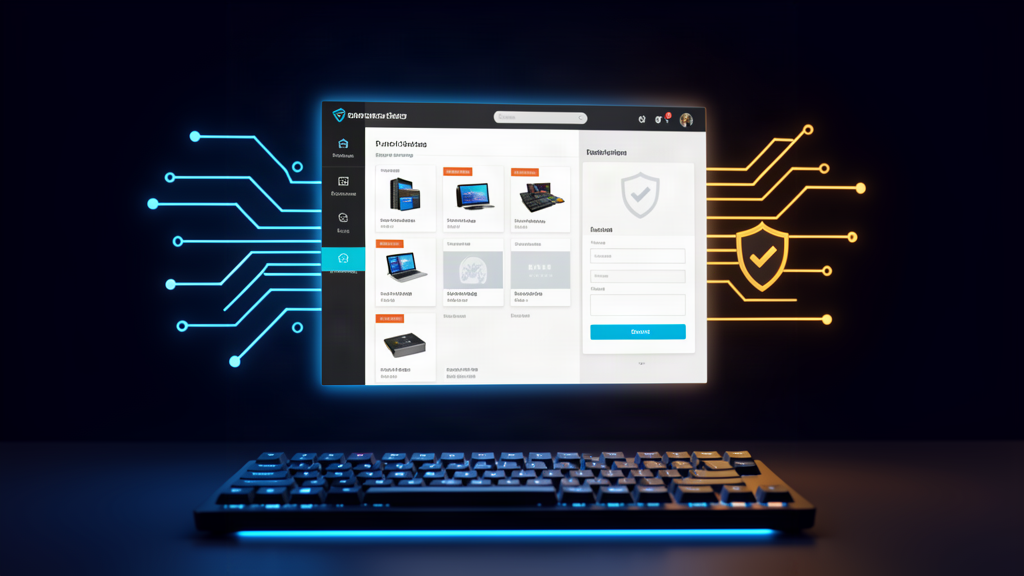

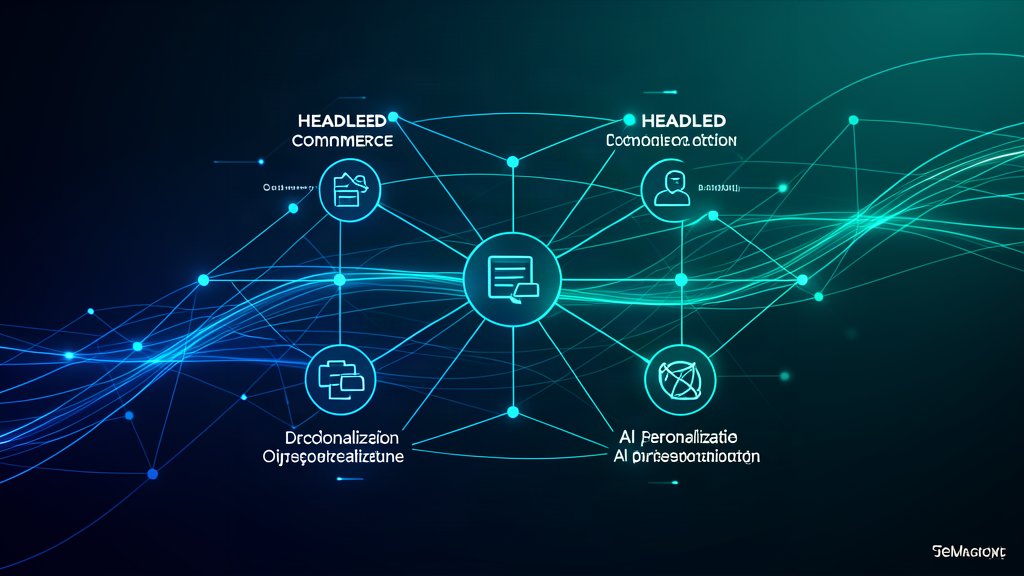
Enterprise e-commerce is being rebuilt around two forces in 2026: headless, composable architecture and AI-driven personalization. The first frees your storefront from rigid legacy platforms. The second turns every product page, search query, and checkout flow into a dynamic experience tuned to each shopper in real time. Together, they separate the brands that are winning on conversion and customer lifetime value from those still running a static, one-size-fits-all store.
For executives and e-commerce leaders, the stakes are concrete. Businesses adopting AI personalization report an average revenue increase of 10–12%, while AI-driven personalization alone can lift conversion rates by up to 23%. Meanwhile, 64% of enterprise organizations are already running a headless approach and reporting better scalability and a clear competitive edge. This is not an emerging trend to monitor — it is the operating standard the market has already shifted toward.
Why Headless Commerce Is the New Enterprise Baseline
Traditional monolithic commerce platforms bundle the storefront, the cart, the checkout, and the content management system into a single tightly coupled stack. Every change — a new landing page, a new payment option, a new personalization rule — requires careful work inside that closed system, and every change risks breaking something else. As product catalogs grow and channels multiply, that coupling becomes the bottleneck.
Headless commerce decouples the frontend presentation layer from the backend commerce engine. The two halves communicate through APIs, which means your development team can build the storefront in any modern framework (React, Vue, or a fast edge-rendered stack) while the commerce engine handles inventory, pricing, carts, and orders underneath. The result is a system you can evolve quickly without touching core commerce stability.
Composable Architecture and API-First Design
Composable architecture takes decoupling a step further. Instead of one platform trying to do everything, you assemble best-in-class services — search, payments, personalization, CMS, order management — and connect them through APIs. This is why API-first design has become the backbone of future-ready operations.
- Rapid scaling: Composable platforms scale individual services independently, so traffic spikes on one channel don't strain the whole stack.
- Customization freedom: Your team can build unique digital experiences without fighting a vendor's fixed templates.
- Multi-vendor support: Compose the right tools for each job and swap them as your needs change.
- Faster time-to-market: Parallel teams ship storefront and backend changes independently.
For growing brands, this separation is what allows AI layers to plug in flexibly. Because the storefront and engine are decoupled, you can add a personalization engine, an intelligent search layer, or a chatbot without rewriting the backend — you simply connect the new service through an API.
AI Personalization: Turning Traffic into Revenue
The headless foundation only matters if you use it to deliver a better shopping experience. That is exactly where AI personalization delivers measurable results.
The Numbers Behind Personalization
- AI personalization lifts conversion rates by up to 23% by adapting product displays, recommendations, and messaging to individual shopper behavior.
- Companies using AI personalization earn up to 40% more revenue than those without it.
- AI chat is associated with roughly 4X higher conversion rates (12.3% vs 3.1% without AI), and shoppers complete purchases 47% faster when assisted.
- Product recommendations personalized to individual preferences can increase conversion rates by up to 288% compared to generic suggestions.
- Personalized recommendations can account for up to 31% of total e-commerce site revenue.
"In 2026, the winning e-commerce brands are no longer optimizing a product page — they are optimizing a personalized experience for every single shopper, in real time."
Moving from Reactive to Predictive
Early personalization was reactive: show a recommendation based on what the shopper just viewed. The 2026 model is predictive and proactive. AI analyzes behavior across the entire journey — browsing, search, cart behavior, past purchases, and even cross-channel signals — to anticipate what a shopper wants before they ask.
Real-time behavioral personalization across multiple touchpoints is delivering conversion-rate lifts of 34% or more, with top-performing retailers seeing gains as high as 52%. The key is that this happens at the moment of decision — at the product page, in the cart, and at checkout — rather than in a weekly email batch.
Intelligent Search and the Shift to Conversational Commerce
Search is the front door of most e-commerce sites, and it is being transformed. Static keyword search returns the same results for everyone. Intelligent, AI-powered search understands intent, synonyms, and context, and it can tailor results to each shopper's preferences and history.
Conversational commerce — chat assistants and text-based shopping tools — is moving from novelty to necessity. These tools handle everything from product discovery to checkout, making the buying process feel effortless. The data is compelling: customers served by AI assistants complete purchases faster and return with higher lifetime value.
Unified Data: The Fuel for Personalization
None of this works without clean, unified customer data. Personalization engines need to see a single view of each shopper — their browsing, their preferences, their past orders — regardless of which channel they came through. This is why unified data has become a foundational trend in enterprise e-commerce.
Headless, composable architectures support this by centralizing customer data and exposing it through APIs that every service in the stack can read. The better your data foundation, the more precise your personalization — and the more of that 23% conversion uplift you can capture.
Governance and Trust in the Age of AI
AI personalization increases revenue, but it also introduces new governance and trust challenges. A majority of customers say advances in AI make it more important for companies to be trustworthy. That means transparency is no longer optional.
- Be transparent: Tell customers how you use their data to improve shopping experiences.
- Develop ethical practices: Ensure your AI models don't create biased or harmful experiences.
- Maintain human oversight: AI personalization should be governed by human review, especially when it touches pricing, recommendations, and sensitive customer data.
- Protect the data: Strong security and compliance practices are essential as you collect and process more behavioral data.
Trust is a competitive advantage. Shoppers who trust your brand return, spend more, and recommend you to others. Treat AI governance as part of the customer experience, not an afterthought.
Edge Performance and Speed
Personalization is only valuable if the experience is fast. Edge performance — rendering content and serving requests from locations close to the shopper — reduces latency and makes dynamic, personalized experiences feel instant. Headless architectures are naturally suited to edge rendering because the frontend is decoupled and can be distributed globally. In a world where every millisecond of delay costs conversions, speed is a strategic asset, not just a technical detail.
How to Get Started: A Roadmap for Enterprise Brands
If your organization is still on a monolithic platform or a static storefront, you don't need to rebuild everything overnight. A phased, composable approach lets you capture value quickly while reducing risk.
Phase One: Assess and Prioritize
Audit your current architecture, data foundation, and the customer journeys where personalization would deliver the highest return. Prioritize the touchpoints with the most traffic and the highest cart abandonment.
Phase Two: Decouple the Storefront
Move to a headless storefront built on a modern frontend framework, connected to your commerce engine through APIs. This unlocks the flexibility to personalize without backend disruption.
Phase Three: Unify Your Data
Centralize customer data into a single source of truth exposed through APIs, so every service in your stack can personalize from the same complete view.
Phase Four: Deploy AI Personalization
Add an AI personalization layer with real-time behavioral targeting, intelligent search, and conversational commerce. Run segment-level A/B tests and target a measurable conversion uplift in your highest-traffic cohorts.
Phase Five: Govern and Scale
Establish governance and trust practices, then scale personalization across channels and geographies. Continuously measure revenue impact, conversion lift, and customer lifetime value.
Why Partner with Tech Hub Services
Delivering this transformation requires more than buying a new platform — it requires a partner who understands both the architecture and the business outcomes. Tech Hub Services is a full-service software development and e-commerce agency based in Brampton, Ontario, helping enterprise brands modernize their commerce operations end to end.
- Custom e-commerce development: We build headless, composable storefronts on modern frameworks that scale with your business.
- AI integration: We design and deploy AI personalization, intelligent search, and conversational commerce that move your metrics.
- Data and platform modernization: We unify your customer data and connect best-in-class services through clean APIs.
- SEO and digital growth: We optimize your storefront for search and AI-driven discovery so personalized experiences also get found.
The brands winning in 2026 are those that combine the flexibility of headless commerce with the conversion power of AI personalization — and they're building on the right foundation. The market has already shifted; the question is whether your store is keeping pace.
Ready to modernize your enterprise commerce stack? Contact Tech Hub Services at info@techhubservices.com or call +1-416-477-6087 to discuss your next step.