
Enterprise e-commerce is at an inflection point. For years, the winning formula was simple: pick a mature commerce platform, bolt on integrations, and scale the catalog. That era is over. In 2026, the leaders in retail and B2B are not the companies with the biggest catalogs or the loudest brand campaigns. They are the ones that modernized their commerce architecture so it can absorb AI, deliver sub-second experiences everywhere, and stay secure under constant attack. The U.S. Census Bureau estimated first-quarter 2026 retail e-commerce sales at $326.7 billion, representing 16.9% of total retail sales and a 9.8% increase from the same quarter in 2025. That scale has turned commerce modernization from a technical initiative into a board-level growth priority.
Yet most enterprises are not modernized. They run on legacy monoliths, brittle integrations, and data silos that were never designed for AI-driven discovery or real-time personalization. The gap between ambition and reality is the single biggest reason digital transformation programs stall. This guide lays out a practical, phased roadmap to modernize an enterprise commerce platform in 2026 — covering architecture, AI readiness, security, and the metrics that prove the investment was worth it.
Why Enterprise Commerce Modernization Matters in 2026
It is tempting to treat modernization as a "nice to have" that competes with feature work for budget. The data says otherwise. Three forces have converged to make a legacy commerce stack an active liability rather than a stable asset.
The AI discovery shift
Shoppers no longer only find products through search engines and category pages. They ask AI assistants — ChatGPT, Perplexity, Google's AI Mode, and the growing ecosystem of shopping agents — "which product should I buy?" and "what's the best option for my use case?" If your product data is locked in a monolithic database with inconsistent attributes, weak metadata, and no machine-readable structure, AI assistants cannot cite your products. You become invisible in the channel where discovery is moving fastest. As the volume of AI-cited recommendations grows, the companies that structured their catalogs for machine consumption are capturing demand that legacy players cannot even see.
The performance bar keeps rising
Mobile-first shoppers expect sub-two-second page loads, and search engines and AI platforms increasingly penalize slow, bloated experiences. Legacy architectures that render entire pages server-side, make dozens of blocking API calls, and serve unoptimized images simply cannot keep pace. Every extra hundred milliseconds of load time measurably erodes conversion, and in 2026 the penalty is worse because both human shoppers and automated crawlers judge your site on speed.
The security and compliance burden
E-commerce is one of the most attacked verticals in the digital economy. Payment card data, customer PII, and account credentials make every store a target for web skimming, credential stuffing, and ransomware. On top of that, PCI DSS 4.0 has introduced mandatory requirements — multi-factor authentication, payment-page script integrity checks, and tighter control over third-party scripts — that legacy platforms struggle to meet. An outdated stack that cannot demonstrate compliance is not just a risk; it is a barrier to winning enterprise contracts, because procurement teams now demand documented payment security controls before onboarding vendors.
The Modernization Trap: Replatforming Everything at Once
Most failed modernization programs share one root cause: an attempt to replace the entire platform in a single "big bang" migration. Teams spend eighteen months building, freeze feature development, and then cut over to an incomplete system that breaks critical integrations. The result is months of lost revenue, frustrated customers, and a burned leadership team that becomes reluctant to fund further transformation.
The alternative is a phased, capability-by-capability approach. You do not need to re-platform to modernize. You need to remove the bottlenecks that prevent you from delivering value, then replace components in manageable phases. A practical roadmap looks like this:
- Identify high-friction journeys first. Map the customer and operational journeys that cause the most pain — a slow checkout, an unreliable search, an inventory sync that fails at peak. These are the highest-ROI modernization targets because they are visible to customers and to revenue.
- Map technical dependencies. Before changing anything, understand how your catalog, pricing, inventory, orders, and customer data connect. A modernization that ignores dependencies creates new silos that are worse than the old ones.
- Assign clear data owners. Data quality is the foundation of AI-ready commerce. Someone must own the accuracy, completeness, and structure of every product attribute. Without ownership, catalog data degrades and every downstream system inherits the rot.
- Protect sensitive information throughout. Payment data, PII, and customer records must be secured and segmented regardless of which components you touch. Security is not a phase at the end of modernization; it is a constraint that shapes every architectural decision.
- Replace components in manageable phases. Extract search into a modern engine. Put an API layer in front of the catalog. Move personalization to a dedicated service. Each phase delivers independent value and de-risks the next.
Headless and Composable: The Architecture Standard
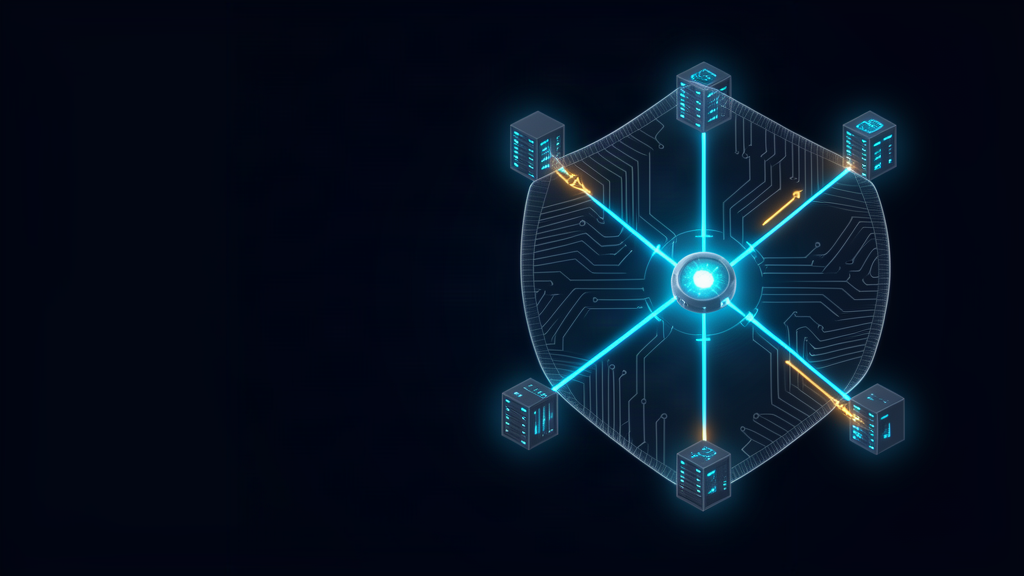
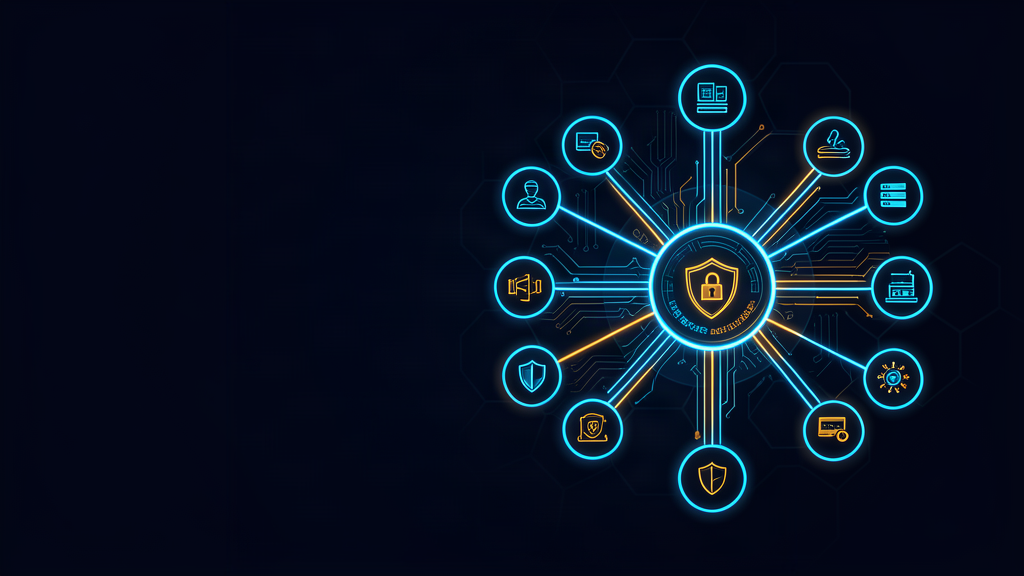
Headless and composable commerce has become the enterprise standard in 2026 for a clear reason: it separates the storefront experience from the commerce engine, exposing everything through APIs. That separation is what makes AI readiness, omnichannel delivery, and rapid experimentation possible at enterprise scale.
In a headless architecture, the front-end (a mobile app, a storefront, a marketplace integration, a voice assistant) talks to commerce services through well-defined APIs. The catalog, cart, pricing, and inventory are each exposed as composable services that can be updated, scaled, and replaced independently. This is a fundamentally different operating model from a monolithic platform where the storefront and backend are coupled.
The hidden cost: your storefront is not free
The most underestimated cost of any headless build is constructing a production frontend from scratch. A monolithic platform hands you a storefront; headless hands you an API. The flexibility of composable architecture is only valuable if your team can actually build and maintain the experience layer on top of it. Enterprises that underestimate this end up with a flexible backend and no way to ship the front-end, which is why the choice of platform and delivery partner matters so much.
Composable for B2B and B2C
Composable architecture shines for complex operations that serve both B2B and B2C. Customer-specific pricing, part-number search, multi-currency catalogs, and cross-channel order management all become tractable when they are exposed as composable services rather than buried in platform-specific logic. This is why API-first platforms and composable transformations dominate enterprise commerce strategy conversations in 2026.
Making Your Store AI-Ready: Discovery Is the New Battleground
Modernizing architecture is only half the story. The other half is making sure AI can actually find, understand, and recommend your products. In 2026, this is where the competitive edge is won and lost.
AI-powered site search and discovery
Traditional site search does exact keyword matching against static relevance scores. It returns products that technically match the query but often miss the shopper's intent. AI-powered search interprets natural language, understands intent, and ranks results dynamically using behavioral signals — click-through rates by query, add-to-cart behavior, purchase conversion data, inventory velocity, and margin contribution. The results are striking: platforms using AI models trained to identify and list products see up to 35% increases in conversion, and NLP-based query understanding has delivered conversion increases in the high 20s for commerce verticals.
Real-time personalization
Modern shoppers expect a store that adapts to them in real time. Static recommendation widgets and "recently viewed" blocks are no longer enough. AI personalization engines adjust ranking, merchandising, and recommendations in-session, based on what the shopper is doing right now, not just what they did historically. The business case is well documented: a majority of e-commerce brands that implement personalization report higher conversion rates, and leading marketers increasingly attribute a meaningful share of annual revenue directly to AI-powered personalization.
Structured data is the foundation
None of this works without clean, structured product data. AI search and personalization are only as good as the catalog they learn from. Every product needs consistent, complete attributes — category, brand, specifications, compatibility, size, color, pricing, availability, and rich descriptions. Inconsistent or incomplete metadata makes AI discovery fail for both the search engine and the AI assistant. This is why data ownership is a foundational step in any modernization roadmap rather than an afterthought.
Security and Compliance: Non-Negotiable in a Modern Stack
A modern commerce platform must be secure by design. As you modernize, you have an opportunity to embed security into the architecture instead of bolting it on.
PCI DSS 4.0 and payment security
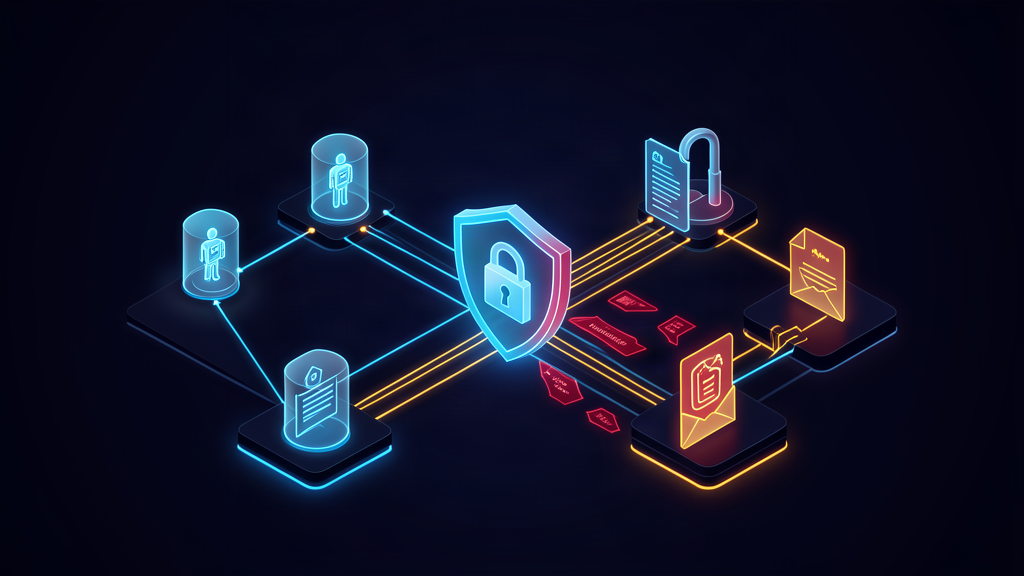
PCI DSS 4.0 applies to everyone who processes, stores, or transmits cardholder data. Its mandatory requirements include multi-factor authentication for administrative access, payment-page script integrity checks to detect web skimming and Magecart attacks, and secure coding practices that prevent vulnerabilities from being introduced in the first place. Enterprises that cannot demonstrate these controls face immediate disqualification from enterprise sales opportunities, because procurement now treats payment security as a baseline requirement.
The regulatory landscape is converging
PCI DSS is not the only framework in play. GDPR, CCPA, and PSD2 apply simultaneously and intersect with PCI DSS on data protection and consumer rights. For e-commerce businesses, treating data privacy and cybersecurity as separate administrative concerns is no longer viable. The frameworks operate together, and an enterprise risk management approach must account for compliance risk, financial risk from breach and ransomware costs, and reputational risk simultaneously.
Securing the modern attack surface
Headless architectures and third-party scripts expand the attack surface. Every JavaScript tag, every API endpoint, and every integration is a potential entry point for attackers. Modernization should include:
- Payment-page script integrity monitoring to detect unauthorized client-side scripts before they exfiltrate card data.
- Zero-trust access controls so every API and admin action is authenticated, authorized, and logged.
- Regular penetration testing against the real architecture, not a checklist, because compliance is a control baseline, not a guarantee of security.
- Segmentation of the cardholder data environment from the rest of the network.
- Continuous monitoring and vulnerability management for the full stack, including open-source dependencies.
Measuring Modernization Success
Modernization must be justified by outcomes, not by architecture diagrams. Define the metrics before you start and track them relentlessly.
Commercial metrics
- Conversion rate — the clearest signal that the experience is working. Watch it across segments, not just in aggregate.
- Average order value and revenue per session — reflect the impact of AI search and personalization on monetization.
- Search abandonment and zero-result rates — a direct measure of whether discovery is working.
Experience and performance metrics
- Page load time and Core Web Vitals — LCP under 2.5 seconds, CLS under 0.1, INP under 200 milliseconds are the modern baselines.
- Mobile conversion share — mobile is the primary commerce surface; it should convert at rates at least comparable to desktop.
- API latency and uptime — the health of the composable layer underneath the experience.
Operational and AI-readiness metrics
- Time-to-market for new storefronts and channels — a key advantage of composable architecture; it should fall dramatically.
- AI citation and discovery visibility — track how often AI assistants cite and recommend your products, not just how you rank on traditional search.
- Data quality scores — the completeness and accuracy of product attributes that power AI.
A Practical Path Forward
Modernizing enterprise e-commerce in 2026 does not require a high-risk, all-or-nothing re-platform. It requires a disciplined, phased approach that removes bottlenecks, exposes commerce through APIs, structures data for AI, and embeds security throughout. Start with the journey that hurts most, assign data owners, protect sensitive information, and deliver value in manageable phases.
Whether you are extracting search into a modern engine, putting an API layer in front of a legacy catalog, building AI-ready product data, or hardening your stack against PCI DSS 4.0, the goal is the same: a commerce platform that is fast, AI-citable, secure, and capable of absorbing the next wave of change. The enterprises that modernize deliberately now will be the ones that own their category when the commerce landscape finishes shifting.
Ready to future-proof your commerce platform? Contact Tech Hub Services at techhubservices.ca/contact or email info@techhubservices.com to start the conversation about your modernization roadmap.