
Somewhere in your organization right now, there is an AI agent demo that impressed everyone in the room. The pilot worked. The stakeholders were convinced. The budget was approved. And then nothing moved. This is the defining operational challenge of enterprise AI in 2026: the gap between a successful pilot and a production-grade AI agent.
The numbers are stark. Industry research consistently shows that roughly 88% of enterprise AI agent pilots never reach production. Meanwhile, adoption is nearly universal — around 79% of enterprises have adopted AI agents in some form, yet only a small fraction run them in production at scale. The technology is not the bottleneck. The infrastructure, governance, and organizational discipline around it are.
At Tech Hub Services, we build enterprise software, e-commerce platforms, and digital experiences for organizations that cannot afford to treat AI as a science project. This guide explains why pilots stall, what separates a demo from a deployed system, and how to build a realistic path from prototype to production.
Why 88% of AI Agent Pilots Never Reach Production
It is tempting to blame the model. In practice, the model is rarely the problem. The blockers are almost always structural, and they fall into three categories.
1. The Infrastructure Gap
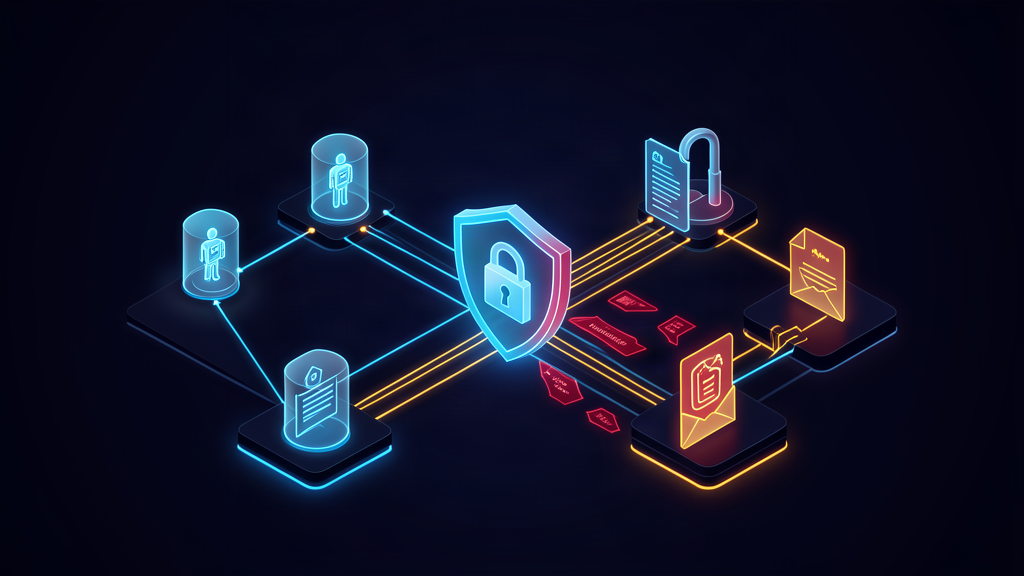
A pilot runs in isolation. Production runs inside your real environment — behind your firewall, connected to your databases, subject to your security controls. The moment an agent needs to touch production data, the conversation changes. Enterprise security teams require isolation, governance, compliance controls, and data residency guarantees before any agent is allowed to act on real systems. If your pilot was built in a sandbox with no thought to how it connects to your actual stack, it will stall at the security review.
2. The Governance Gap
Risk committees cannot verify security controls, and legal teams cannot sign off without audit trails. When there is no clear ownership for AI outcomes, organizations cannot build governed pathways fast enough to keep pace with employee demand. AI governance has become the defining risk category for enterprises scaling AI — and most organizations have not yet defined who is accountable for it.
3. The Ownership Gap
AI agents do not deploy themselves. Someone must own the end-to-end outcome: the data quality, the error handling, the human review process, the ongoing monitoring. In most stalled pilots, nobody was ever assigned that responsibility. The demo worked because a champion drove it; production failed because no team owned it.
Assistance vs. Execution: Why the Distinction Matters
There is a critical difference between an AI assistant and an AI agent, and it changes everything about how you deploy them.
- An AI assistant suggests, summarizes, and helps a human make a decision. The human remains in the loop and owns the outcome.
- An AI agent executes — it takes actions, calls tools, updates records, and completes tasks with limited human intervention.
Moving from assistance to execution is where the risk profile changes dramatically. An assistant that drafts an email is low-risk. An agent that updates your CRM, processes a refund, or triggers a workflow is operating on your business. That shift demands a fundamentally different approach to testing, monitoring, and rollback.
The 90-Day Pilot-to-Production Playbook
Organizations that successfully scale AI agents do not skip steps. They follow a disciplined, phased approach. Here is a practical roadmap.
Phase 1: Choose the Right Use Case (Weeks 1–2)
Start with a high-value, low-risk use case. The goal is not the most impressive demo — it is the most defensible deployment. Look for a process that is repetitive, well-documented, and where a mistake is recoverable. Document the current process, baseline the data quality, and define what success looks like in measurable terms.
Phase 2: Build the Governance Foundation (Weeks 3–4)
Before you write more code, define the guardrails. Who owns the outcome? What are the failure modes? What is the human review process? What data can the agent access, and under what conditions? Regulatory frameworks such as GDPR, HIPAA, and financial audit standards should be treated as architectural constraints from day one — not retrofitted later.
Phase 3: Controlled Pilot (Weeks 5–8)
Run the agent in a limited scope with real data and real users. Measure accuracy against defined thresholds, identify and mitigate at least three failure modes, and confirm the human review process works as an effective quality gate. This is the go/no-go decision point: proceed to limited production only if the agent meets your accuracy bar and the review process is functioning.
Phase 4: Limited Production (Weeks 9–10)
Deploy to a small, controlled slice of the business. Monitor cost per transaction, cycle time reduction, and error rates. Compare agent performance against the manual baseline. This is where you learn what breaks in the real world.
Phase 5: Measure, Iterate, and Scale (Weeks 11–12)
Only after the limited production run is stable do you scale. Expand scope, add integrations, and formalize the operational governance framework. Track user adoption and ROI — not just technical metrics, but business outcomes.
What Production-Grade AI Actually Requires
Getting an agent from pilot to production is an infrastructure problem as much as a model problem. The following are non-negotiable for a serious deployment.
Isolation and Security Controls
Agents must run in isolated environments with least-privilege access. They should be able to do only what they need to do — nothing more. Role-based access control (RBAC), data isolation guarantees, and incident-response readiness are prerequisites, not afterthoughts.
Observability and Audit Trails
You cannot govern what you cannot see. Every action an agent takes must be logged and auditable. When something goes wrong, you need to know exactly what the agent did, when, and why. This is what lets legal and risk teams sign off.
Human Review as a Quality Gate
Production agents need a defined human-in-the-loop process for high-stakes actions. The human review is not a failure of automation — it is the control that makes automation safe enough to scale.
Data Quality and Integration
An agent is only as good as the data it can access. Standardized data models, APIs, and communication protocols are what let AI systems exchange information securely. Organizations that have addressed data integration scale AI far faster than those treating it as an afterthought.
Common Pitfalls to Avoid
- Treating the pilot as the product. A demo that works in a sandbox is not a system that works in production. Plan for the production environment from day one.
- Skipping governance. If legal and risk cannot sign off, your agent will not deploy. Build the audit trail early.
- No clear ownership. Assign a team accountable for the end-to-end outcome before you start.
- Scaling before stabilizing. Expand only after the limited production run is proven. Premature scaling multiplies failures.
- Ignoring data quality. Garbage in, garbage out applies to agents more than any other system. Audit your data before you connect an agent to it.
AI Agents in E-Commerce and Security
For e-commerce and security-conscious organizations, the pilot-to-production gap carries specific stakes.
E-Commerce: Agents That Operate, Not Just Recommend
In e-commerce, the difference between a recommendation engine and an agent is execution. A production agent can manage inventory levels, adjust pricing within defined guardrails, personalize the shopping experience in real time, and trigger fulfillment workflows. But an e-commerce agent touches customer data, payment systems, and live inventory — which means it must be governed with the same rigor as any financial system. Data isolation, audit trails, and human approval for high-value actions are not optional. The payoff is real: agents that reliably execute merchandising and operations decisions reduce cycle time and free your team for higher-value work. But the organizations that benefit are the ones that built the governance foundation before connecting the agent to their storefront.
Security: Agents as Force Multipliers, With Guardrails
Security teams are increasingly using AI agents to triage alerts, correlate threat intelligence, and automate routine response actions. The value is enormous — agents can process far more signals than a human team. But security agents operate in a domain where a wrong action has real consequences. Production security agents must run with least-privilege access, complete audit trails, and a defined human approval path for destructive or high-impact actions. The same discipline that governs your production code must govern your security automation. An agent that can act on your network is a powerful tool — and a powerful risk if it is not properly contained.
Why This Matters for Your Business
The organizations that win in 2026 are not the ones with the most AI. They are the ones that applied it thoughtfully to real business problems — with the discipline to move from pilot to production without the stall. AI agents that actually get work done are a competitive advantage. AI agents that live forever in demo purgatory are a sunk cost.
The gap between assistance and execution is where real value is created. An assistant saves you a few minutes. An agent that reliably executes a business process — with governance, observability, and human oversight — transforms how you operate.
How Tech Hub Services Can Help
Moving from pilot to production is an engineering and governance challenge, not just a model selection problem. Tech Hub Services builds enterprise software, e-commerce platforms, and AI-enabled systems with the security, integration, and operational discipline that production deployment demands. We help organizations design AI agents that are not just impressive in a demo — but safe, governed, and valuable in production.
If you are ready to close the gap between your AI pilot and real business impact, contact Tech Hub Services at info@techhubservices.com or +1-416-477-6087.