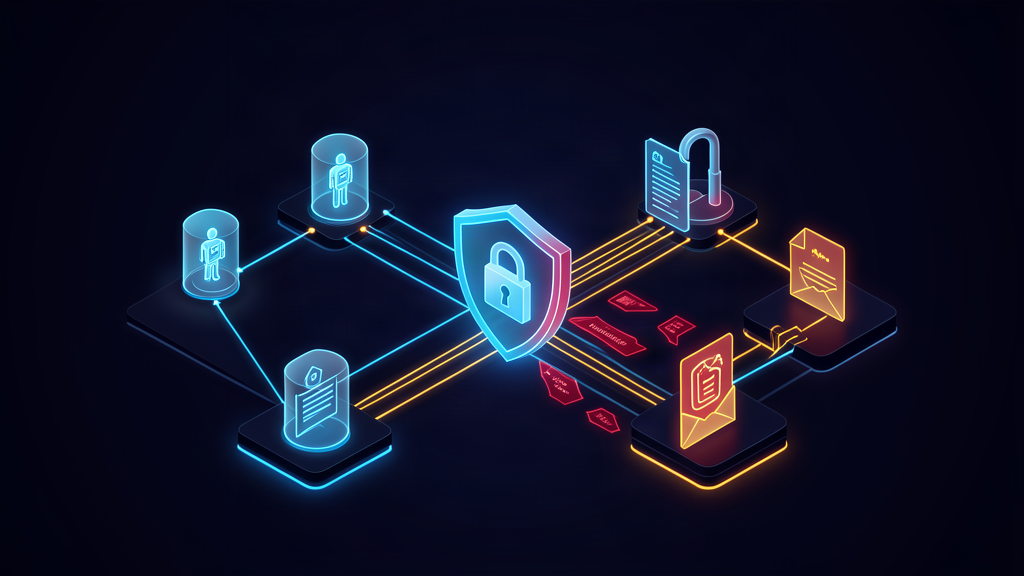

Enterprise AI agents are no longer a pilot project. They are now embedded in day-to-day operations, drafting code, resolving support tickets, updating customer records, and orchestrating workflows across the systems that run your business. The same autonomy that makes them valuable is also what makes them dangerous. An agent with too much access, a poorly scoped tool, or a single poisoned input can act on your behalf in ways no human employee ever could, at machine speed and at machine scale.
The numbers are sobering. In 2026, roughly 79% of enterprises report adopting AI agents in some form, yet only 11% run them in production. Among organizations that have deployed agents, 88% report at least one security incident tied to those agents, and 88.4% of organizations experienced at least one AI-agent-related security breach in the past twelve months. The most common incidents are data leakage and manipulation by malicious or untrusted inputs. This is not a theoretical risk. It is the new reality of enterprise software, and it demands a security model built for autonomous actors, not for human users.
At Tech Hub Services, we build enterprise software, e-commerce platforms, and SEO systems for organizations that cannot afford to treat AI security as an afterthought. This guide lays out a practical, defense-in-depth framework for securing enterprise AI agents in 2026, covering the threat model, identity and access control, guardrails, observability, and the governance that ties it all together.
Why AI Agents Are a Different Security Problem
Traditional security assumes a human in the loop. A user authenticates, receives a set of permissions, and acts within them. AI agents break that assumption. They behave like users, but they do not follow the same rules. They hold credentials, access data, and execute actions, often with no human reviewing each step. The Cloud Security Alliance has made this point directly: agents scale faster than governance frameworks, and securing them requires the same rigor and traceability applied to human users.
There are three structural reasons agents are harder to secure than the applications that came before them.
- Autonomy. An agent can chain dozens of actions toward a goal without stopping for approval. A single misstep in that chain can have outsized consequences.
- Indirect input. Agents read from untrusted sources, emails, web pages, documents, and other agents. Malicious content can be hidden inside data the agent is simply trying to process.
- Machine identity. Agents authenticate as non-human identities. If those identities are not uniquely managed, you cannot audit what any one agent did, or revoke it when it misbehaves.
This is why the security community now treats agentic AI as a distinct discipline. It is not just model security, protecting the model from adversarial attacks, and it is not just application security, hardening the software that runs the model. Agentic AI security is about controlling, verifying, and governing an autonomous actor that operates with enterprise-level access.
The Threat Model: What Can Actually Go Wrong
To secure agents, you first have to understand how they fail. The OWASP Top 10 for LLM Applications, updated in 2025, is the clearest map of the risk surface. Several of its categories are directly relevant to autonomous agents.
Prompt Injection (LLM01)
Prompt injection holds the top spot for the second consecutive edition, and for good reason. LLMs process instructions and data in the same channel without clear separation, so an attacker can craft input the model interprets as a new instruction rather than content to process. The threat has evolved from simple chatbot jailbreaks to indirect prompt injection, where malicious instructions are hidden inside documents, emails, or web pages that an agent retrieves through RAG. A single malicious email could command an email-handling agent to exfiltrate sensitive data.
Excessive Agency (LLM06)
Excessive agency is the risk that an agent has more capability than its task requires. An agent with database access can delete records. An agent with email permissions can send phishing messages. The fix is to restrict permissions to exactly what each task requires, require human approval for consequential actions, and run extensions in the user's security context rather than with generic high-privileged identities.
System Prompt Leakage (LLM07)
If an agent's system prompt is exposed, attackers can manipulate its behavior or reverse-engineer internal logic. Treat system prompts as sensitive configuration, not as content.
Beyond the OWASP list, the 2026 incident data points to two dominant root causes: agents granted more access than they need, and agents acting on data they should never have touched. Roughly 60% of organizations cite an agent's ability to access privileged data as a security risk, and 58% cite the potential to perform unintended actions. These are not exotic attacks. They are the predictable consequences of giving autonomous systems too much reach.
Identity First: Every Agent Needs a Machine Identity
Every other control, authorization, monitoring, governance, and revocation, depends on first answering one question: who is this agent? Identity must precede authorization. Without a verified, unique identity for each AI agent, there is no reliable way to enforce access policies, audit behavior, or revoke access when needed.
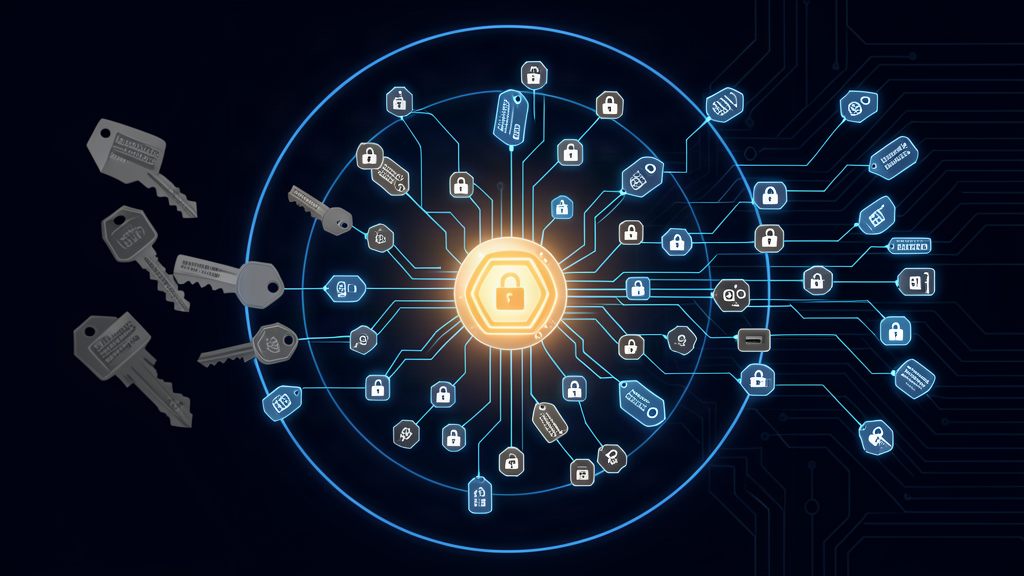
This is the machine identity problem. Agents authenticate as non-human identities, and those identities need the same lifecycle management as human users: issuance, rotation, and revocation. A static credential that never rotates is a standing risk. An agent identity that is shared across many agents is an audit nightmare. The discipline of agentic AI security is built on cryptographic trust and continuous verification, not on a single login event.
In practice, this means:
- Give every agent a unique, verifiable identity tied to its purpose.
- Issue short-lived credentials and rotate them automatically.
- Scope each identity to the minimum set of tools and data the agent needs.
- Revoke an identity immediately when the agent is decommissioned or compromised.
Treating agents as first-class identities is the foundation everything else stands on. Skip it, and your guardrails are operating on an unverifiable actor.
Least Privilege and the Two-Part Security Framework
Access control is where security strategy meets operational reality. The core principle, least privilege, is deceptively simple: trim access to only what is necessary for the agent's specific task. In practice, achieving this for autonomous systems that make real-time decisions requires a fundamentally different approach than traditional user access management.
A useful way to think about it is the two-part framework: guardrails and constraints. Guardrails examine what the agent says, filtering for toxicity, PII exposure, and prompt injection. Constraints govern what the agent does, limiting which tools it can call, which records it can modify, and which actions require approval. Many enterprises implement the first half and call it complete. They are only half protected.
Consider a common scenario. An AI agent with access to your CRM receives a request to apply a 40% discount to all enterprise accounts. Traditional guardrails examine the language. No toxicity. No PII exposure. No prompt injection detected. The request passes validation. But should it execute? A constraint layer would say no, because the action exceeds the agent's authority and requires human approval. Guardrails alone cannot stop an agent from doing something it is authorized to attempt but should not be allowed to complete.
The practical path combines least-privilege access control, input and output guardrails at the model layer, data loss prevention, comprehensive audit trails, and continuous behavioral monitoring. If an agent needs different access levels for different tasks, use multiple agents with least-privilege configurations rather than one god-mode prompt.
Guardrails: Protecting What Agents Say and Do
Guardrails operate at the boundary between the agent and the world. They are deterministic, auditable controls that sit outside the model, because the model itself should be treated as an untrusted decision layer. Security enforcement belongs in external systems, not inside the prompt.
There are two layers of guardrails to build.
Input Guardrails
Input guardrails validate everything that enters the agent, including content retrieved from external sources. They detect prompt injection patterns, strip untrusted instructions, and quarantine suspicious content before it reaches the model. Because indirect prompt injection hides in documents and web pages, input validation must cover retrieved data, not just direct user messages.
Output Guardrails
Output guardrails inspect what the agent produces before it acts. They block sensitive data from leaving the system, prevent the agent from issuing commands outside its authority, and flag outputs that deviate from expected behavior. Output validation is the last line of defense before an agent's decision becomes an action.
Guardrails should be implemented as security hooks that integrate with the frameworks you already use. A webhook-based guardrail is just HTTP, no proprietary SDK, no special agent framework. If you can handle a webhook, you can build a security guardrail. This keeps the control plane independent of the model and the agent framework, which is exactly where it belongs.
Observability and Audit: You Cannot Secure What You Cannot See
Autonomous agents make decisions at machine speed, which means you need visibility into what they did, why they did it, and what they touched. Observability is not a nice-to-have. It is the control that makes every other control verifiable.
Agent observability is a known weak point. Many organizations cannot answer three basic questions: where are their AI agents, what can the agents connect to, and what can the agents do? Without that visibility, you are flying blind.
Build an audit trail that records, for every agent action:
- The agent identity and the task it was pursuing.
- The tools and data sources it accessed.
- The exact inputs it received, including retrieved content.
- The decision it made and the action it took.
- Whether the action required and received human approval.
This audit trail serves two purposes. It lets you investigate incidents after the fact, and it lets you detect anomalous behavior in real time. Continuous behavioral monitoring can flag an agent that suddenly starts accessing systems outside its normal pattern, the signature of a compromised or misaligned agent. Compliance and auditability close the loop. GDPR, HIPAA, SOC 2, and ISO frameworks each have specific requirements around data access and processing boundaries. Producing the mapping from agent action to regulatory control automatically, rather than through manual evidence collection, is the difference between an audit that takes weeks and one that takes hours.
Governance: The Framework That Ties It Together
Security controls are only as strong as the governance that enforces them. Governance answers the questions that controls cannot: who decides what an agent is allowed to do, how are those decisions reviewed, and how do you stay compliant as agents scale.
Compliance for agentic AI requires navigating overlapping frameworks. GDPR and CCPA govern data privacy. The EU AI Act introduces AI-specific regulation. NIST AI RMF provides a governance structure. SOC 2 covers enterprise contractual obligations. The organizations that succeed treat these not as a checklist but as a design constraint on how agents are built and deployed.
There is a striking gap between adoption and control. Roughly 82% of organizations use AI agents, but only 44% have policies in place to secure them. About 73% of CISOs are very or critically concerned about AI agent risks, yet only 30% have mature safeguards in place. And 55% of IT security leaders are not fully confident they have appropriate guardrails to deploy agents. The gap is not a technology problem. It is a governance problem, and it is fixable with the right framework.
Start with a blueprint for the agentic enterprise. Answer three questions: where are your agents, what can they connect to, and what can they do? Then build the controls and the governance around those answers. Use AI-specific threat modeling, such as MITRE ATLAS, to assess the risk vectors introduced by autonomy. And pair the technical controls with clear communication so that everyone in the organization works from the same security-focused playbook.
A Practical Roadmap for Securing Enterprise AI Agents
Securing agents does not require a complete rebuild. It requires a deliberate sequence of steps, each building on the last.
- Inventory your agents. You cannot secure what you do not know exists. Document every agent, its purpose, its identity, and the systems it can reach.
- Assign machine identities. Give every agent a unique, verifiable identity with short-lived, rotating credentials.
- Enforce least privilege. Scope each identity to the minimum tools and data its task requires. Split god-mode agents into multiple least-privilege agents.
- Build guardrails. Add input and output validation as external, deterministic security hooks. Treat the model as an untrusted decision layer.
- Require human approval for consequential actions. Define which actions are irreversible or high-risk, and gate them behind human review.
- Instrument observability. Log every agent action, input, decision, and approval. Monitor for behavioral anomalies in real time.
- Map compliance. Connect agent actions to the regulatory controls they must satisfy, and automate the evidence trail.
- Review and iterate. Treat agent security as a continuous process, not a one-time project. Reassess as agents gain new capabilities.
The trajectory is clear. Gartner predicts that by 2028, AI agents will autonomously execute over 15% of all enterprise security decisions. The organizations that thrive in that world are the ones that build the identity, access, guardrail, and observability controls now, while they still have the time to do it deliberately.
Conclusion
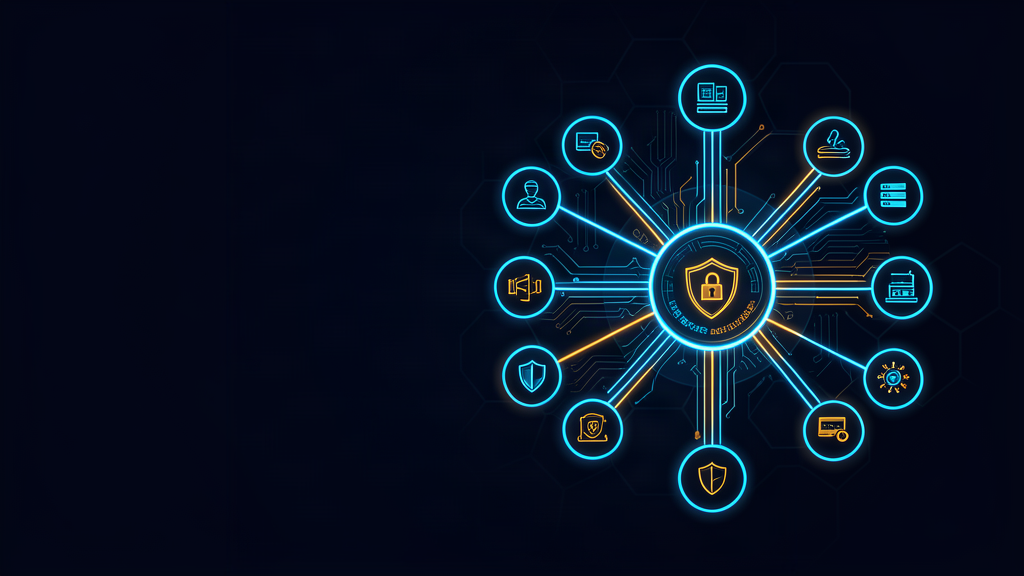
Enterprise AI agents are the most consequential new asset in the modern technology stack, and they are also the most consequential new risk. The good news is that the security model is not mysterious. It is identity, least privilege, guardrails, observability, and governance, applied to autonomous actors with the same rigor you already apply to human users.
The organizations that get this right will capture the productivity gains of agentic AI without surrendering control. The ones that do not will learn the hard way, through data leakage, unintended actions, and audit failures. The choice is not whether to deploy agents. It is whether to deploy them securely.
If you are building or scaling AI agents and need a security architecture that keeps pace, Tech Hub Services can help. We design enterprise software, e-commerce platforms, and AI systems with security built in from the first line of code. Contact us at info@techhubservices.com or +1-416-477-6087 to discuss how to secure your agentic future.