

Two years ago, technical SEO for an online store meant keeping Googlebot fed. In 2026 it means keeping a dozen or more automated readers fed at once, several of which will never send a visitor to your site. The shift shows up in the numbers. Seer Interactive tracked click-through rates on queries that trigger Google's AI Overviews and watched them fall from 1.41% to 0.64%. Dataslayer measured a 61% decline on affected queries. AI Overviews now appear on roughly 87% of commercial searches and about 16% of ecommerce-specific ones. When an answer box sits above the results, the click is optional. That is the uncomfortable part for anyone selling online: the traffic curve bends down even when rankings hold steady. The stores that keep growing are not the ones chasing a new hack. They are the ones whose catalog is readable enough that Google and the AI agents summarising it can pull accurate product data without guessing. Start with the areas that move revenue, in the order we usually tackle them with clients.
Crawl and indexation come first
None of the rest matters if a crawler cannot reach a page. Enterprise catalogs break this in predictable ways: filter combinations that generate thousands of near-duplicate URLs, product variants that each spin off their own indexable page, and stale URLs that still rank but point nowhere useful.
Duplicate URLs and crawl budget
A fashion retailer with eight colour variants per product can quietly produce 80-plus indexable URLs for a single item once size and filter combinations are layered in. Multiply that across a few thousand SKUs and crawl budget gets spent on junk. Google visits the same low-value pages repeatedly while new arrivals sit unindexed for weeks. Fixing it takes governance rather than a plugin. Decide which URL parameters are crawlable, canonicalise the rest to the clean product page, and keep filter URLs out of the index unless they have search volume worth targeting. Then check the basics. Across ecommerce sites audited in 2026, 53% were missing canonical tags and 62% had broken links. Those two alone account for a lot of wasted crawl.
Sitemaps are discovery, not indexing
Sitemaps are the other half. An XML sitemap is an inventory of URLs. Uploading one to Search Console does not force a crawl, and Google will ignore it if it is not convinced the URLs are new or important. Keep it accurate, drop the dead entries, and stop treating it as something you submit once and forget.
Structured data is what the machines actually read
Schema markup is the difference between a page a machine can parse and a page a machine has to infer. That gap now decides whether you show up in a rich result, in Google Shopping, and increasingly in the AI summaries that answer shopping questions before a page ever loads.
What the numbers say
The payoff is documented. Pages carrying structured data see 20 to 40% higher click-through rates, and rich results run about 82% higher than plain listings. Product schema specifically drives around 4.2x more visibility in Google Shopping. Google's own guidance is blunt about the rule that matters most: the markup has to match what a shopper can see on the page. Inaccurate schema is worse than none, because it teaches the machine to distrust your data.
Keeping schema accurate at scale
For large catalogs the hard part is not writing the markup. It is keeping it correct as prices change, stock moves, and variants come and go. That is engineering work, and it belongs with the team that owns the product data rather than with whoever edits the CMS. The markup should be generated from the same source of truth that feeds your storefront, not hand-edited in a CMS field that drifts out of date by the second week.
Internal linking does more work than most teams admit
Search engines and AI crawlers use internal links to decide which pages on your site matter. A product buried eight clicks from the homepage, reachable only through a filter nobody indexes, is hard to treat as important. Yet 86% of ecommerce brands have no deliberate internal linking strategy, and even among high-visibility sites 41% do it poorly. The pattern that causes this is a reliance on navigation menus and filter panels as the only path to a product. Those links are fragile. They often use parameters that get canonicalised away, they change with every filter state, and they break the moment a category is reorganised. A better setup gives each commercially important product a permanent, human-readable path: category pages that link to subcategories, subcategories that link to their best-performing products, and related-product modules that make sense to a shopper. That produces a stable link graph a crawler can follow and a customer can navigate. It also spreads authority to the pages you want ranking rather than letting it pool on category pages alone.
Speed stopped being only about ranking
Core Web Vitals still matter for rankings, and they now matter for machine readability too. Google's thresholds have not moved: Largest Contentful Paint under 2.5 seconds, Interaction to Next Paint under 200 milliseconds. The average ecommerce site scores 67 out of 100 on Lighthouse, and 70.5% fail the performance bar outright. Since mobile carries 68% of US ecommerce traffic, that failing grade lands on the majority of your shoppers.
Why AI crawlers care about rendering
What changed is who is affected. A heavy, JavaScript-dependent product page is slow for a customer and often unreadable to a crawler that does not render scripts. If an AI agent has to execute a full client-side app just to see your price and availability, it will often skip you and cite a competitor that served clean HTML. Serving pre-rendered or server-rendered HTML for product and category pages removes that risk. Incremental Static Regeneration has become a sensible default for 2026 storefronts because it gives you static-page speed with background updates when price or stock changes. The practical order is unglamorous: cut render-blocking scripts, ship properly sized images, defer what does not need to load above the fold, and measure on a mid-range phone over a real connection rather than on your laptop.
Your newest visitors are bots you may not have planned for
Googlebot is no longer the only crawler that matters. GPTBot, ClaudeBot, and PerplexityBot now hit ecommerce sites too, each crawling for a different reason, with different rendering capabilities and different appetites. Some train models, some index for live retrieval, and some do both.
Deciding what AI crawlers can access
This is where robots.txt gets genuinely complicated. Blocking AI crawlers protects content you did not want scraped, but it also removes you from the retrieval systems that increasingly answer buying questions. There is no universal right answer. What matters is that the decision is deliberate and matches your business model, not left to a default file nobody has read since launch. One finding worth sitting with: a Semrush analysis of five million URLs cited by AI platforms found that the cited pages shared most of the technical traits of strong traditional SEO performers. Fast, crawlable, well-structured pages get cited. The AI era rewards the same fundamentals, it just raises the stakes on getting them right.
Where to start
Prioritise by revenue risk, not by how easy a fix is. Start with the pages that carry commercial intent: product and category pages, and the money keywords behind them. Confirm they are indexable, canonicalised, and free of accidental noindex tags. Then make sure their structured data matches reality. After that, fix Core Web Vitals on the highest-traffic templates. Crawl hygiene across the long tail can wait until the pages that pay the bills are clean. If you sell across multiple regions or markets, work one storefront at a time. Hreflang errors and duplicated international URLs compound the crawl problems you already have, and untangling them is easier when you limit the blast radius.
A four-pass sequence
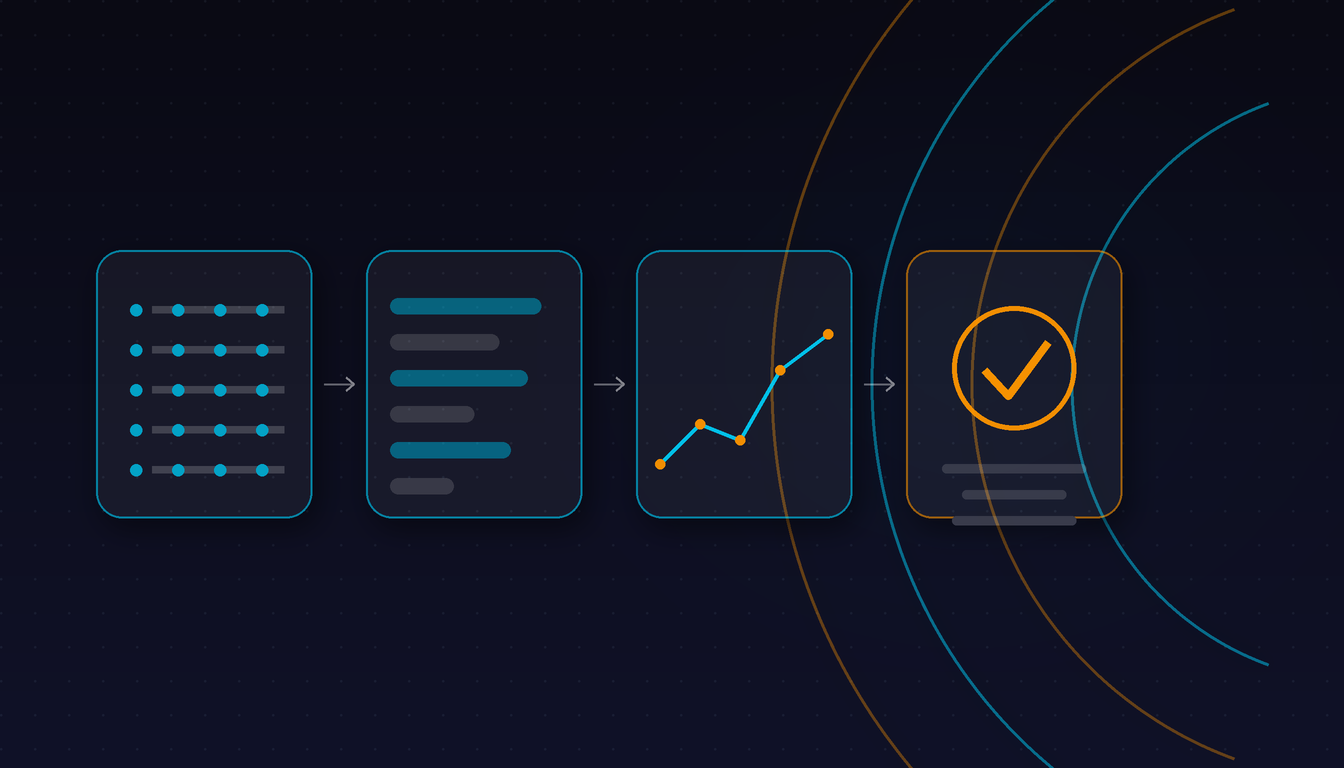
A workable sequence for most catalogs runs in four passes:
- Pull a full crawl and fix indexability: canonicals, noindex leaks, redirect chains, and broken links.
- Rebuild internal linking so every revenue page has a stable, crawlable path.
- Ship structured data from your product source of truth and validate it against the visible page.
- Fix Core Web Vitals template by template, starting with the ones that carry the most traffic and revenue.
Measure the work honestly
Rank tracking alone will mislead you this year. Rankings can hold while clicks fall, because the answer moved above the result. Watch impressions, clicks, and conversion rate separately, and track whether your products appear inside AI Overviews and AI shopping features. If impressions climb and clicks stall, you are being read but not chosen. That is a structured data and page-experience problem, not a content problem.
Rankings can hold while clicks fall
Zero-click behaviour is now the default, not the exception. Roughly 69% of searches end without a click, and on queries with an AI Overview that figure rises to 83%. Organic search still drives about 43% of ecommerce traffic and 23.6% of orders, so the channel is far from dead. But the way it delivers value is changing. More of the job is being the source an answer is built from, not just the link someone taps. Set a baseline before you touch anything. Crawl the site, export your Core Web Vitals by template, and record which pages generate revenue today. Change one layer at a time and give each change a full crawl cycle before judging it. Technical SEO is slow to show up in the charts and fast to compound, which is exactly why it gets skipped and exactly why it keeps working. The stores winning the AI-mediated search era are not doing anything exotic. They keep a clean, fast, accurately described catalog. That has been the job for a decade, and it still is. What changed is that more readers now depend on it, and most of them will never click through to say thank you.