
Cyber threats are evolving faster than ever. In 2026, the average cost of a data breach has climbed past $5 million for small and mid-sized businesses, and the frequency of attacks continues to rise. What was once considered enterprise-grade security is now the baseline for any business that handles customer data, processes payments, or operates online.
For growing businesses in Brampton, Mississauga, and across the GTA, the question is no longer "should we invest in cybersecurity?" but "how do we build a security posture that scales with our growth?"
Why 2026 Is a Turning Point for Cybersecurity
Several converging trends have made 2026 a critical year for security investment. The regulatory landscape has tightened, threat actors have adopted AI, and the attack surface has expanded dramatically as businesses move more operations online.
The Regulatory Shift
Canada's proposed Critical Cyber Systems Protection Act and updated PIPEDA requirements are pushing stronger security mandates for businesses of all sizes. Non-compliance now carries significant financial penalties and reputational damage.
Beyond Canada, businesses serving US or EU markets must contend with SEC cybersecurity disclosure rules and GDPR's evolving enforcement. The compliance burden is real, and it's growing every quarter.
AI-Powered Threats Are Here
Attackers now use generative AI to craft convincing phishing campaigns, automate vulnerability scanning, and generate deepfake audio for social engineering. Traditional rule-based security tools struggle to keep up with AI-generated attacks that adapt in real time.
The same AI that powers productivity tools is now being weaponized. Businesses need AI-driven defenses to fight AI-powered threats — a symmetric response is no longer optional.
Building an Enterprise-Grade Security Posture
Enterprise-grade security doesn't mean enterprise-sized budgets. It means adopting the right frameworks, tools, and practices that scale with your business. Here's what every growing business needs in 2026.
Zero Trust Architecture
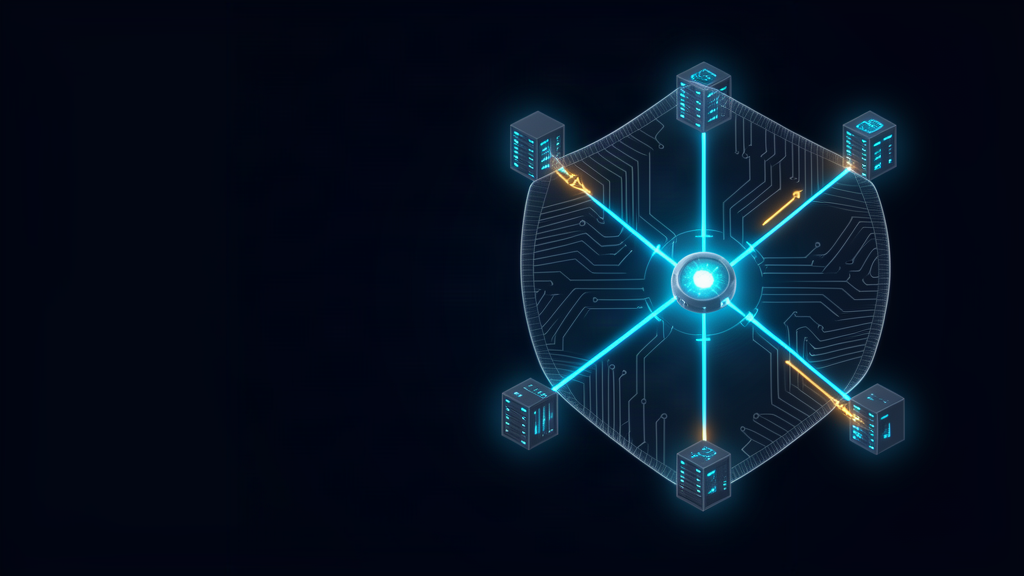
The old perimeter-based security model is dead. Zero Trust assumes that no user, device, or network is trustworthy by default — every access request is verified, authenticated, and authorized before being granted.
Key components of a Zero Trust implementation include:
- Identity and access management (IAM) with multi-factor authentication enforced everywhere
- Micro-segmentation to limit lateral movement if a breach occurs
- Least-privilege access — users get only the permissions they need, nothing more
- Continuous monitoring of all network traffic and user behavior
For most businesses, starting with IAM and MFA covers the highest-risk gaps immediately. From there, micro-segmentation and monitoring can be phased in as the security program matures.
AI-Driven Threat Detection and Response
Modern Security Information and Event Management (SIEM) platforms use machine learning to establish baselines of normal behavior and flag anomalies in real time. These systems can detect ransomware encryption patterns, unusual data exfiltration, and credential abuse before human analysts would spot them.
AI-driven detection reduces mean time to identify (MTTI) breaches from weeks to minutes. For a growing business, that speed difference can mean the difference between a contained incident and a catastrophic data loss event.
Endpoint Detection and Response (EDR)
With remote and hybrid work now standard, endpoints are the primary attack vector. EDR solutions monitor every device — laptops, servers, mobile devices — for suspicious behavior and can automatically isolate compromised endpoints from the network.
Combined with a solid patch management policy, EDR closes the window of vulnerability that attackers exploit. Automated patching for critical vulnerabilities should be deployed within 24 hours of disclosure.
Data Protection and Backup Strategy
Ransomware remains the most disruptive threat to growing businesses. A robust backup strategy is your last line of defense when all other controls fail.
The 3-2-1-1 Backup Rule
Security experts now recommend the 3-2-1-1 backup strategy:
- 3 copies of your data
- On 2 different media types
- With 1 copy offsite
- And 1 copy air-gapped or immutable (cannot be modified or deleted)
Immutable backups stored in cloud object storage with versioning enabled ensure that even if an attacker gains administrative access, they cannot encrypt or delete your recovery copies. Test your restore process quarterly — a backup you can't restore from is worthless.
Encryption Everywhere
Data should be encrypted at rest and in transit. TLS 1.3 for web traffic, AES-256 for stored data, and end-to-end encryption for sensitive communications are the minimum standard in 2026.
Database encryption, encrypted backups, and encrypted file storage ensure that even if an attacker exfiltrates data, they cannot read it without the decryption keys — which should be stored in a hardware security module (HSM) or a cloud key management service.
Compliance and Governance
Security isn't just about technology — it's about process, policy, and proof. Regulators and business partners increasingly require evidence of a security program, not just promises.
Security Frameworks to Adopt
Three frameworks provide a solid foundation for any growing business:
- NIST Cybersecurity Framework (CSF) 2.0 — The gold standard for organizing security programs around five functions: Identify, Protect, Detect, Respond, Recover
- ISO 27001 — The international standard for information security management systems (ISMS), increasingly required for B2B contracts
- CIS Controls — A prioritized set of 18 actions that provide quick wins for security improvement
Most businesses should start with the CIS Controls (especially the first six, called the "Implementation Group 1") and work toward NIST CSF alignment. ISO 27001 certification is a longer-term goal that signals maturity to enterprise clients.
Incident Response Planning
Every business needs a written incident response plan that covers:
- How to detect and confirm a security incident
- Who to contact (internal team, legal counsel, cyber insurance, law enforcement)
- Steps to contain and eradicate the threat
- Communication protocols for customers, partners, and regulators
- Post-incident review and improvement process
Run tabletop exercises quarterly. The first time you execute your incident response plan should not be during an actual breach.
How Tech Hub Services Can Help
Building an enterprise-grade security program is complex, but you don't have to do it alone. Tech Hub Services provides end-to-end cybersecurity consulting and implementation for growing businesses across the GTA and beyond.
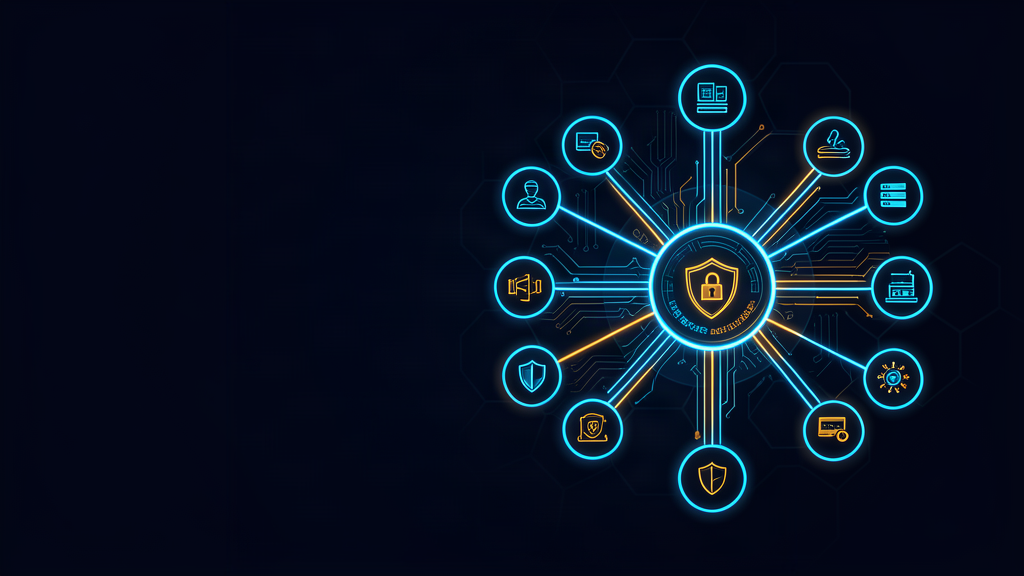
Our security services include:
- Security assessments and gap analysis — Identify your highest-risk vulnerabilities and prioritize fixes
- Zero Trust architecture design and deployment — IAM, MFA, micro-segmentation, and least-privilege access
- AI-driven threat detection implementation — SIEM, EDR, and SOAR integration
- Compliance readiness — NIST CSF, ISO 27001, PIPEDA, and industry-specific regulations
- Incident response planning and tabletop exercises — Be ready before the breach happens
- Security awareness training — Your employees are your first line of defense
We combine deep technical expertise with practical business understanding. Our team has helped businesses in e-commerce, fintech, healthcare, and professional services build security programs that protect their data, their customers, and their reputation.
The Bottom Line
Cybersecurity in 2026 is not a cost center — it's a competitive advantage. Businesses that invest in enterprise-grade security earn customer trust, win enterprise contracts, and avoid the devastating financial and reputational damage of a breach.
The threats are real, the regulations are tightening, and the tools are available. The only question is whether you'll act before or after an incident forces your hand.
Ready to strengthen your security posture? Contact Tech Hub Services today for a free security consultation. Our team will assess your current security gaps, recommend a prioritized action plan, and help you build a security program that scales with your business.