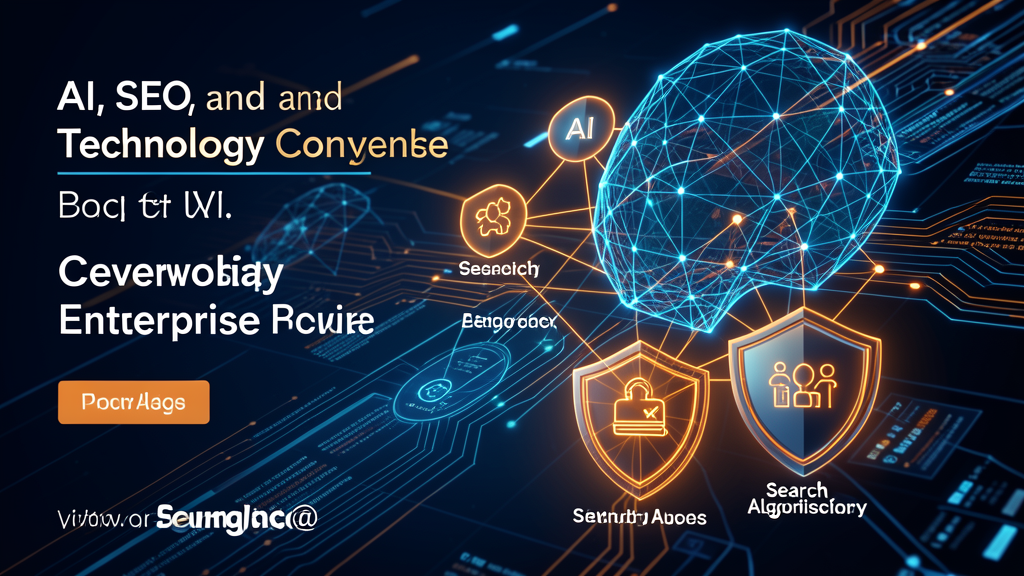
The Convergence of AI, SEO, and Cybersecurity: Enterprise Survival Guide for 2026
If you are leading a business in 2026, you are navigating three tectonic shifts simultaneously. Artificial intelligence is no longer experimental — it is embedded infrastructure. Search engines have been rewritten by AI, and your customers find you through chatbots and answer engines, not just blue links. Meanwhile, cyber threats have become automated, adaptive, and relentless. These three forces — AI transformation, AI-driven search, and AI-powered security — are not separate challenges. They are converging. And the enterprises that understand how they intersect will thrive. Those that treat them in silos will fall behind.
At Tech Hub Services, we build enterprise software, optimize digital presence through SEO, and harden cybersecurity postures for businesses across North America. This guide draws on the latest 2026 research and our hands-on experience to give you a practical roadmap for the year ahead.
1. AI Is No Longer a Tool — It Is the Infrastructure
By mid-2026, 67% of enterprises have integrated AI or machine learning into their operations, according to industry surveys. Gartner predicts that 40% of enterprise applications will include task-specific AI agents by the end of this year — up from less than 5% in 2025. This is not a trend. It is a structural shift.
What does this mean in practice?
- AI agents are the new workforce. Machine identities now outnumber human identities 45 to 1 in large enterprises. These agents handle customer service, code review, data analysis, and even security monitoring — autonomously.
- AI is embedded, not bolted on. The most successful enterprises in 2026 are not running AI as a separate initiative. They have woven it into their CRM, ERP, marketing automation, and DevOps pipelines.
- Low-code is being disrupted by AI-generated code. Platforms that once required drag-and-drop skills are now being replaced by natural-language-to-application pipelines. A developer can describe a feature in plain English and have a working prototype in minutes.
For enterprise leaders, the question is no longer "should we use AI?" but "how do we govern, secure, and scale AI across our organization?" This is where custom enterprise software development becomes critical. Off-the-shelf AI tools rarely fit the unique workflows, compliance requirements, and data architectures of established businesses. Tech Hub Services specializes in building custom AI-integrated software that aligns with your existing systems — not the other way around.
2. SEO in the Age of AI Search: What Has Changed
Search engine optimization in 2026 looks almost nothing like it did three years ago. Google's Search Generative Experience (SGE), AI Overviews, and competing answer engines like Perplexity and ChatGPT Search have fundamentally altered how users discover content.
Key Shifts in Enterprise SEO for 2026
- From keywords to intent. Ranking now depends on how well your content satisfies user intent, not how many times a keyword appears. AI models evaluate semantic depth, factual accuracy, and authority.
- Entity-based optimization. Search engines now understand entities — people, places, products, concepts — and their relationships. Your content strategy must map to entity graphs, not keyword lists.
- AI crawlers need clean technical SEO. Large language models and AI crawlers (like GPTBot, Claude-Web, and Google's AI crawler) need the same clean technical foundation as traditional search bots: proper sitemaps, canonical tags, structured data, and fast load times. On enterprise sites with thousands of pages, this requires automated governance.
- Content is evaluated by AI, for AI. Your content is now read by both human visitors and AI models that summarize, cite, and recommend it. E-E-A-T (Experience, Expertise, Authoritativeness, Trustworthiness) matters more than ever because AI models are trained to prioritize authoritative sources.
Enterprise SEO in 2026 is a cross-functional discipline. It requires coordination between content teams, developers, product managers, and data scientists. At Tech Hub Services, we treat SEO as a technical and strategic function — not a checklist of meta tags. We build SEO into the architecture of your site, from URL structure and internal linking to schema markup and content governance.
3. The Cybersecurity Imperative: Zero Trust Meets AI Threats
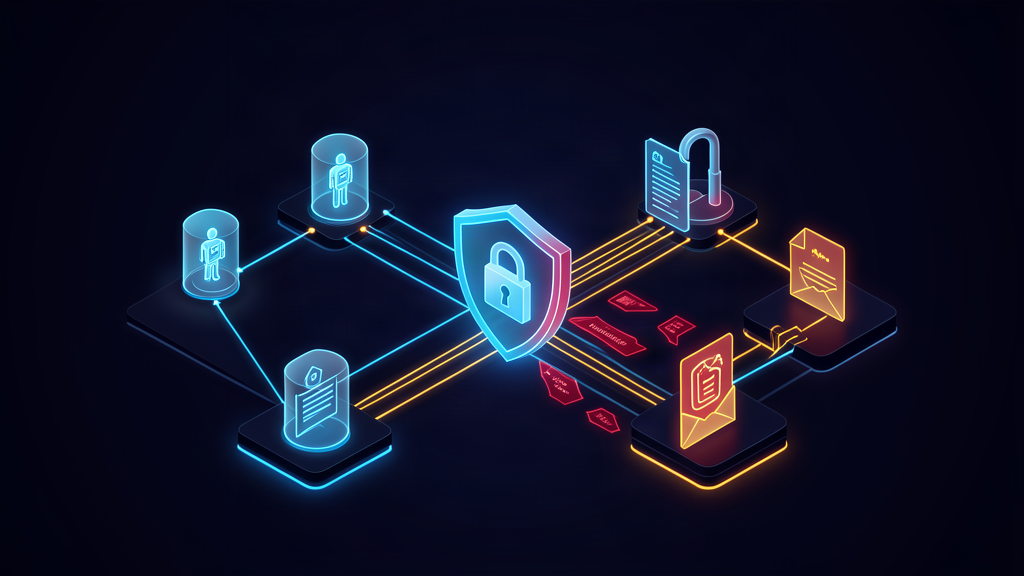
Here is the uncomfortable truth: the same AI that powers your productivity gains also powers your adversaries. In 2026, cybercriminals use AI to generate convincing phishing emails at scale, automate vulnerability scanning, and even create deepfake audio for social engineering attacks. The IBM X-Force report continues to show credential abuse as one of the top attack vectors — and AI makes it worse.
Zero Trust Is No Longer Optional
The "never trust, always verify" model has moved from best practice to business necessity. Organizations that implemented Zero Trust AI Security in 2025-2026 reported 76% fewer successful breaches and reduced incident response times from days to minutes, according to Seceon research.
Key components of a modern enterprise security posture include:
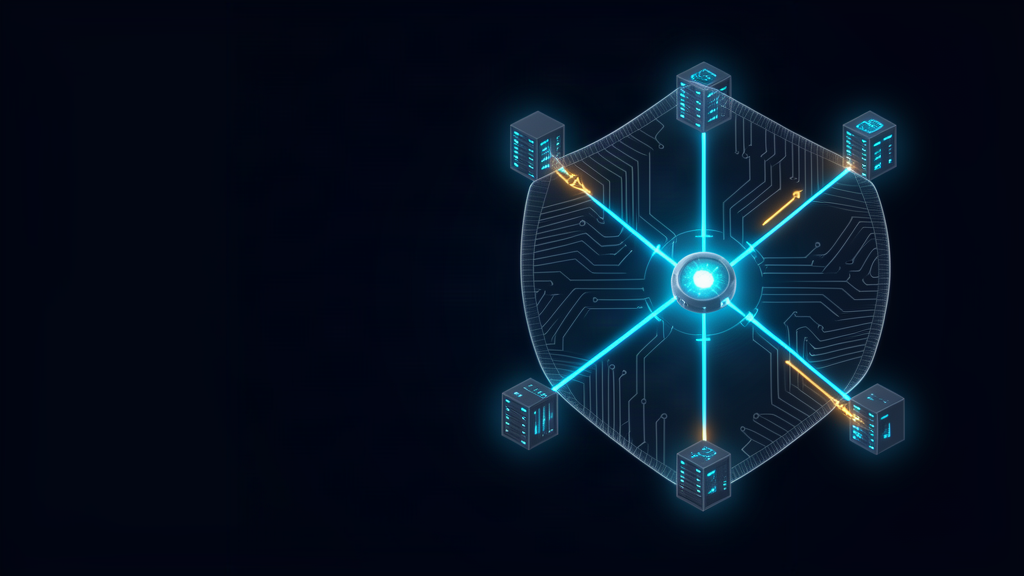
- AI-driven threat detection. Machine learning models that analyze network traffic, user behavior, and system logs in real time to identify anomalies before they become breaches.
- Identity as the new perimeter. With SaaS sprawl, hybrid work, and third-party integrations, the traditional network boundary is gone. Identity governance — adaptive authentication, session monitoring, and least-privilege access — is your first line of defense.
- Securing AI agents. As machine identities outnumber human ones, you need policies for what AI agents can access, what data they can process, and how they authenticate. Prompt injection, data exfiltration, and autonomous misuse are real and growing risks.
- Continuous compliance. Regulatory pressure is increasing. Frameworks like SOC 2, ISO 27001, and PCI DSS require ongoing evidence collection, not annual audits. Automated compliance monitoring is becoming standard.
Tech Hub Services offers comprehensive cybersecurity assessments and remediation — from vulnerability scanning and penetration testing to full Zero Trust architecture implementation. Our VulnScan platform provides automated security scanning that translates technical findings into business risk language, so your leadership team understands exactly what is at stake.
4. Where These Forces Converge: The Integrated Enterprise
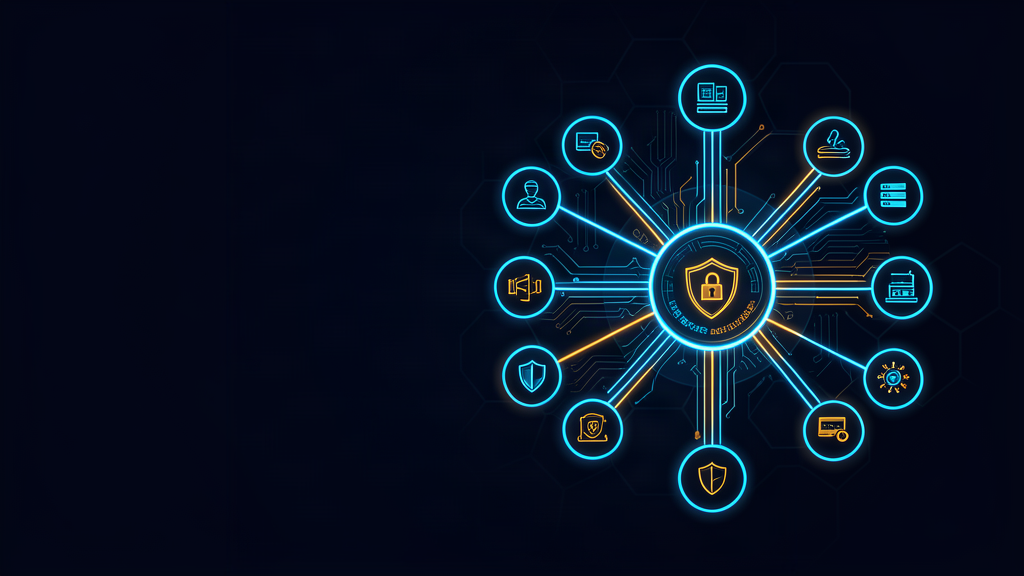
The most forward-thinking enterprises in 2026 are not treating AI, SEO, and cybersecurity as separate departments. They are building integrated strategies where each function reinforces the others.
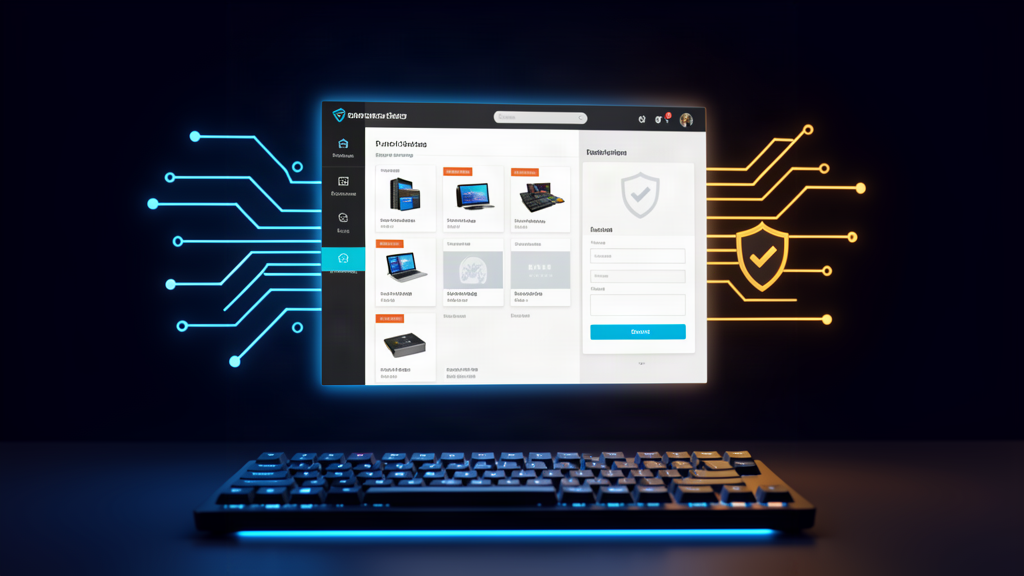
Consider a concrete example: an e-commerce enterprise deploying an AI-powered product recommendation engine.
- Software development builds the recommendation engine as a custom microservice integrated with the existing ERP and CRM.
- SEO ensures that product pages are structured with rich schema markup so that AI search engines surface recommendations in answer boxes and voice search results.
- Cybersecurity ensures that the recommendation engine's API is secured, customer data is encrypted, and the AI model itself is protected against adversarial attacks and data poisoning.
Each function depends on the others. A security flaw in the AI pipeline can expose customer data. Poor SEO means the feature never reaches users. And without custom software development, the integration never happens at all.
5. Practical Steps for Enterprise Leaders
Audit Your AI Readiness
Map where AI is already being used in your organization — officially and unofficially. Shadow AI (employees using unsanctioned AI tools) is a major security and compliance risk. Establish governance policies, approved tool lists, and data handling guidelines.
Invest in Technical SEO Infrastructure
If your site has more than 1,000 pages, you need automated SEO monitoring. Implement structured data (JSON-LD), optimize Core Web Vitals, and ensure your content is accessible to both traditional crawlers and AI models. Treat SEO as a continuous engineering function, not a one-time project.
Implement Zero Trust Architecture
Start with identity. Deploy multi-factor authentication everywhere, implement least-privilege access controls, and monitor for anomalous behavior. Then extend Zero Trust principles to your AI systems — every API call, every agent action, every data access should be verified.
Partner with Experts Who Understand All Three
The biggest mistake enterprises make is hiring separate vendors for software development, SEO, and security — each with their own tools, timelines, and priorities. An integrated approach requires a partner who understands how these disciplines interact. Tech Hub Services brings all three under one roof, with senior consultants who average 15+ years of experience across enterprise software, digital strategy, and cybersecurity.
Conclusion: 2026 Is the Year of Integration
The enterprises that win in 2026 will be those that break down silos. AI is not just an IT project — it is a business transformation that touches every department. SEO is not just marketing — it is a technical discipline that determines whether your AI investments actually reach customers. Cybersecurity is not just compliance — it is the foundation that makes everything else possible.
At Tech Hub Services, we help enterprises navigate this convergence every day. Whether you need custom software with AI integration, a comprehensive SEO overhaul, or a security posture assessment, we have the expertise to deliver results that compound across your entire business.
Ready to build your integrated enterprise strategy? Contact Tech Hub Services today for a free consultation. Let us show you how AI, SEO, and cybersecurity work together to drive real business growth.
Tech Hub Services is a full-service enterprise software development, SEO, and cybersecurity agency based in Brampton, Ontario, serving businesses across North America. Visit us at techhubservices.ca or call +1-289-831-7777.