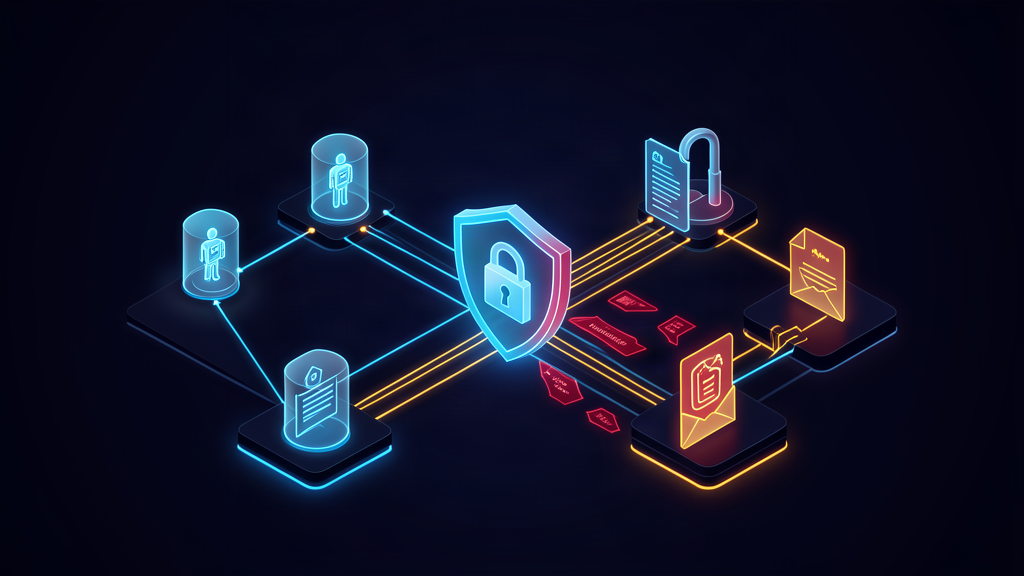

Enterprise software development has crossed a threshold. For years, artificial intelligence was a promising add-on — a code autocomplete here, a chatbot there. In 2026, that is no longer the case. AI has become the engine of the software delivery lifecycle itself, and security has moved from a final checkpoint to a discipline woven into every commit, every pipeline, and every deployment.
For technical leaders, the question is no longer whether to adopt AI-assisted development and DevSecOps. It is how to adopt them at enterprise scale — with governance, reliability, and security intact. This guide breaks down the defining forces reshaping enterprise software in 2026 and lays out a practical playbook for building software that is faster, more secure, and more resilient.
The New Reality: AI Is Structural to Software Delivery
Industry data makes the shift unmistakable. According to analysis from Keyhole Software, AI and machine learning integration has reached roughly 67% adoption across enterprises in 2026, with projections climbing toward 89% by 2028. Cloud-native architectures have reached 74% adoption and are on track for near-universal status. Zero-trust security has jumped from 51% to 79% as regulatory pressure and breach consequences make legacy perimeter-based models unsustainable.
These are not isolated trends. They are converging into a single operating model. The organizations winning in 2026 are the ones that treat AI, cloud-native infrastructure, and security as one integrated system rather than three separate initiatives.
From Copilots to Teammates: Agentic AI in the Lifecycle
The most transformative shift is the emergence of agentic AI — systems that do not merely suggest code but actively work through the development lifecycle. By 2028, a third of enterprise software is expected to include agentic AI, and AI agents are projected to influence or handle half of all business decision-making.
In practice, this means AI agents that triage issues, review pull requests, generate test cases, and even propose architectural changes. They are becoming teammates rather than tools. But the winning organizations are not the ones that let AI run unchecked. They are the ones that pair automation with strong engineering governance, senior technical leadership, and clear human oversight. Architecture decisions, security review, and complex business logic still demand human judgment.
Cloud-Native and Platform Engineering as the Default
Cloud-native development has become the default for building and deploying enterprise applications. Teams increasingly rely on Kubernetes, containers, microservices, and serverless infrastructure to move quickly and scale reliably. Alongside this, platform engineering has matured through the concept of Internal Developer Platforms (IDPs) — golden paths that make security, observability, and AI tooling the default rather than the optional extra.
The takeaway for enterprise leaders is to invest in structure, not just tools. Teams that connect AI, security, observability, and cost control into their daily workflows move faster with fewer surprises. They scale delivery with less chaos and more confidence.
DevSecOps: Security Moves Into the Delivery Pipeline
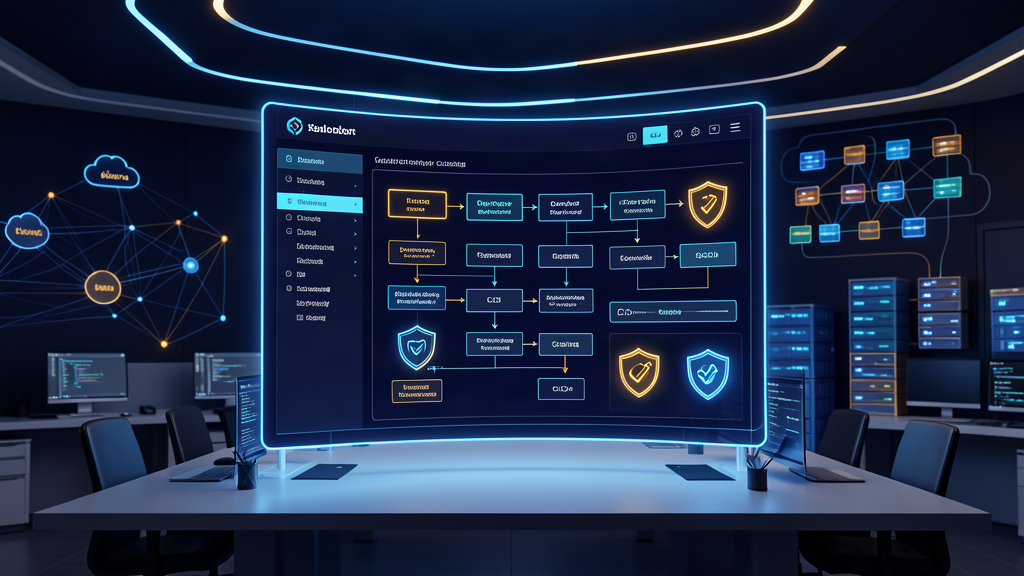
Security in 2026 is no longer a phase at the end of development. It is a discipline embedded throughout the pipeline. The market data reflects this: cloud-native applications account for 48% of the DevSecOps market by development environment, and secure CI/CD pipeline automation accounts for 28% by use case. When the largest segment is cloud-native delivery and the biggest use case is automated CI/CD, the message is clear — security is moving into delivery itself.
Shifting Security Left — and Keeping It There
DevSecOps is built on the principle of shifting security left: catching vulnerabilities as early as possible in the development process, when they are cheapest and fastest to fix. In 2026, this means:
- Automated SAST and DAST integrated directly into CI/CD pipelines, scanning every commit for vulnerabilities before code ever reaches production.
- Software Bills of Materials (SBOMs) generated automatically for every build, giving teams end-to-end visibility into their software supply chain.
- Artifact signing and provenance to ensure that what is deployed is exactly what was reviewed and approved.
- Policy-as-code that enforces security, compliance, and cost guardrails automatically across every environment.
- Continuous monitoring and feedback that closes the loop between production incidents and development priorities.
Organizations that embed these practices into their pipelines ship faster and more securely. Those that treat security as a separate, manual step are exposing their entire business to a single point of failure.
The AI Security Imperative
AI is not just transforming how software is built — it is transforming the threat landscape. The statistics are sobering. API-related security incidents in AI platforms have increased 78% year over year, and AI supply-chain attacks via third-party models have tripled since 2022. Yet 62% of organizations still have no AI vendor security policy.
Defenders are fighting back with the same weapon. AI now powers threat detection, automates Security Operations Center (SOC) workflows, and enables autonomous red teaming. AI-augmented SOCs detect threats up to 50% faster and reduce analyst workload by as much as 60%, allowing security teams to shift from reactive alert management to proactive threat hunting.
For enterprises building AI into their products, the mandate is clear: secure the AI supply chain, vet third-party models, and treat AI systems as first-class attack surfaces. The era of reactive patching is over.
Building the 2026 Enterprise Software Playbook
None of these trends exist in isolation. AI-assisted development produces software faster — but that software must be secured with zero-trust and supply-chain controls from day one. Cloud-native infrastructure provides scalability — but only if security, observability, and cost control are built into the platform itself.
The organizations that win in 2026 treat technology as one integrated system rather than a collection of silos. They build security in from the start, deploy AI as a strategic capability governed by strong human oversight, and measure success by operational impact rather than software deployed.
Your Next Steps
- Pilot one agentic AI workflow in your development process with clear rules and human review — for example, AI-assisted issue triage or pull request review.
- Embed DevSecOps into your pipeline with automated SAST/DAST, SBOM generation, and artifact signing.
- Secure your AI supply chain by vetting third-party models and establishing an AI vendor security policy.
- Adopt an Internal Developer Platform that makes security, observability, and AI tooling the default path.
- Measure operational impact — not just deployment velocity — to prove the value of your transformation.
At Tech Hub Services, we help enterprise organizations build secure, AI-augmented software on cloud-native foundations. From DevSecOps pipelines and platform engineering to AI integration and supply-chain security, we build technology that performs — and protects. Contact us today to start building your 2026 advantage.