
In 2026, the conversation around artificial intelligence has shifted from "Can AI do this?" to "How do we deploy AI agents that work reliably at scale?" The era of experimental chatbots and one-off GPT wrappers is over. Enterprise-grade AI agents — autonomous systems that plan, execute, and iterate on complex tasks — are now the primary battleground for competitive advantage.
For businesses in Brampton, the GTA, and across North America, understanding how to integrate AI agents into operations is no longer a future consideration. It is a present-day necessity. This post explores the state of enterprise AI agents in 2026, the architectures that work, the pitfalls to avoid, and how Tech Hub Services helps organizations build production-ready AI systems.
The Rise of Autonomous AI Agents
AI agents differ fundamentally from the chatbots and copilots that dominated 2023-2024. While a chatbot responds to prompts, an AI agent operates autonomously — it receives a goal, breaks it into subtasks, executes each step using available tools, evaluates results, and iterates until the objective is met. This shift from reactive to proactive AI represents the most significant technological transition since the cloud.
Cloudflare CEO reported in mid-2026 that agentic traffic now accounts for over 50% of all internet traffic for the first time. Chrome has announced experimental "Agentic Browsing" audits in Lighthouse and PageSpeed Insights. The infrastructure of the internet itself is being reshaped around the assumption that AI agents — not humans — will be the primary consumers of web content and services.
What Makes an AI Agent Enterprise-Grade
Not all AI agents are created equal. Consumer-grade agents can book a restaurant reservation or draft an email. Enterprise-grade agents must meet a fundamentally different set of requirements:
- Reliability and determinism — Enterprise agents must produce consistent, auditable results. A financial reconciliation agent cannot hallucinate a transaction. This requires structured output schemas, guardrails, and human-in-the-loop verification at critical decision points.
- Tool integration and API orchestration — Enterprise agents connect to CRM systems, ERP platforms, databases, and legacy APIs. They must handle authentication, rate limiting, error recovery, and data transformation across heterogeneous systems.
- Observability and logging — Every decision an enterprise agent makes must be logged, traceable, and explainable. Regulators and auditors require full decision trails, especially in regulated industries like finance, healthcare, and insurance.
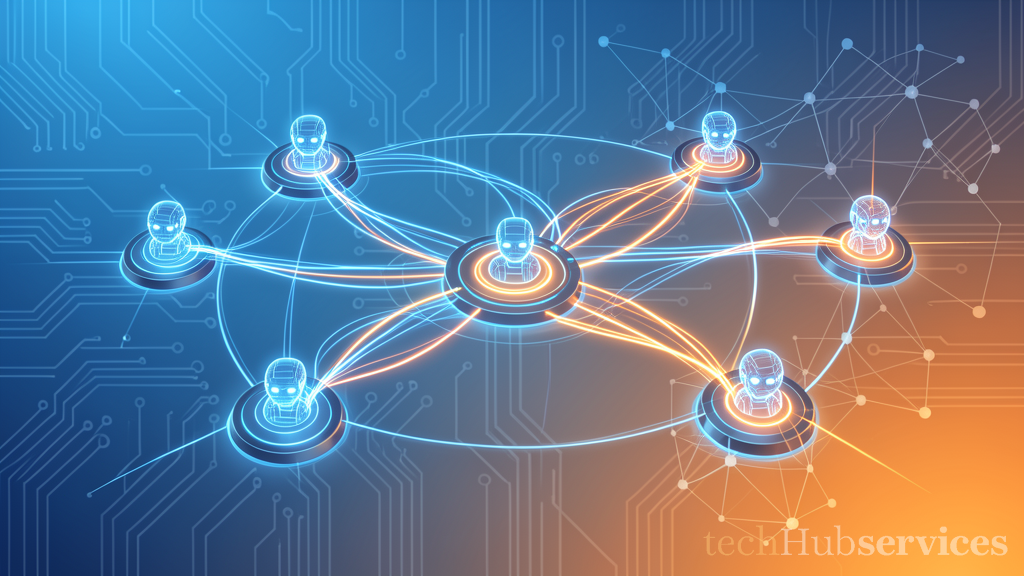
- Multi-agent coordination — Complex enterprise workflows require multiple specialized agents working together. A customer service escalation might involve a triage agent, a knowledge base agent, a billing agent, and a human handoff agent — all coordinating through a shared state and task queue.
Real-World Enterprise Agent Deployments in 2026
The most successful enterprise AI deployments in 2026 share a common pattern: they start with a narrow, high-value use case, prove ROI within 90 days, and expand from there. Here are the categories where AI agents are delivering measurable results right now.
Customer Operations and Support
Customer service remains the most mature enterprise AI agent use case. Modern AI agents handle tier-1 and tier-2 support autonomously, escalating only the most complex issues to human agents. Unlike the rigid chatbots of 2023, today agents can access order history, check inventory, process returns, and update CRM records — all within a single conversation.
Companies using AI agents for customer operations report 40-60% reduction in support ticket volume, 30% improvement in first-contact resolution, and 24/7 availability without staffing increases. The key differentiator is deep system integration: the agent does not just talk — it acts.
Software Development and DevOps
AI coding agents have matured significantly. Tools like Claude Code, Codex CLI, and OpenCode can autonomously implement features, write tests, debug issues, and even review pull requests. In 2026, the most effective development teams use a human reviewer, AI implementer model where developers focus on architecture and code review while agents handle implementation.
DevOps agents monitor system health, diagnose incidents, and execute remediation playbooks autonomously. When a server CPU spikes, a DevOps agent can identify the process, check recent deployments, roll back if needed, and notify the on-call engineer — all before a human would have finished reading the alert.
Data Processing and Business Intelligence
Data pipeline agents ingest, clean, transform, and load data from dozens of sources without human intervention. BI agents generate reports, identify trends, and surface anomalies. The most sophisticated deployments use natural language interfaces where executives can ask "What were our top-selling products in the GTA last quarter?" and receive a formatted report with visualizations — generated by an agent that queried the data warehouse, identified the relevant metrics, and rendered the output.
The Architecture Behind Production AI Agents
Building an AI agent that works reliably in production requires a fundamentally different architecture than a proof-of-concept. Here is what the most successful enterprise deployments have in common.
Agent Orchestration Frameworks
In 2026, the AI agent stack has standardized around a few key layers. The orchestration layer manages agent lifecycle — spawning agents, assigning tasks, monitoring progress, and handling failures. LangGraph, CrewAI, and custom orchestration built on temporal.io are the most common choices for production deployments.
The tool layer provides agents with access to external systems through well-defined APIs. Each tool has a schema, authentication, rate limits, and error handling. The agent does not call APIs directly — it calls tools, and the tool layer handles the underlying complexity.
Memory and State Management
Enterprise agents need persistent memory that spans sessions, tasks, and even different agent types. A customer support agent must remember the customer history from previous interactions. A development agent must understand the full codebase context, not just the current file.
Vector databases (Pinecone, Weaviate, Qdrant) combined with structured databases (PostgreSQL, MySQL) provide the memory layer. The agent stores conversation history, task results, and learned patterns in vector embeddings for semantic retrieval, while structured data (user profiles, order history, configuration) lives in relational tables.
Guardrails and Safety Systems
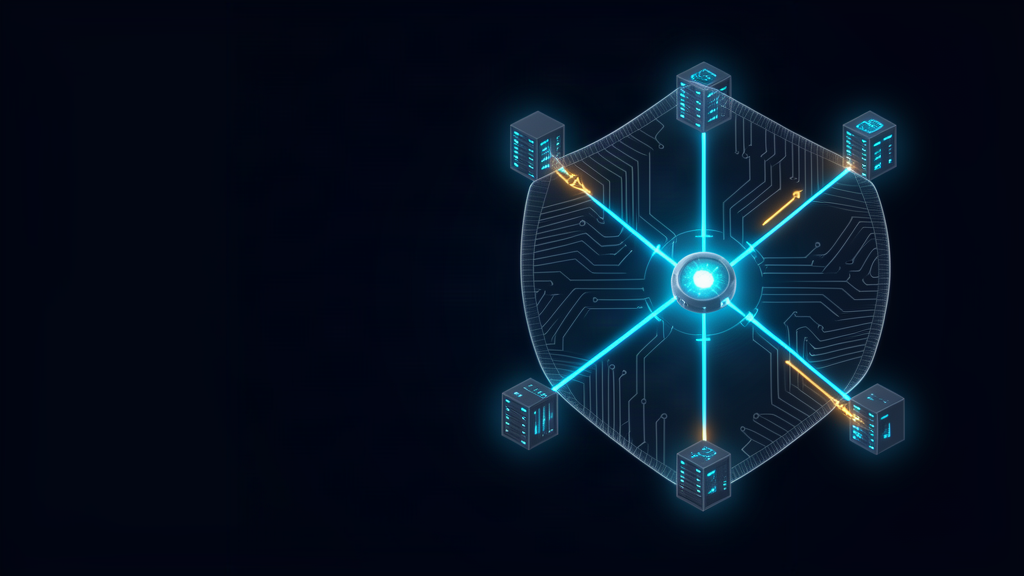
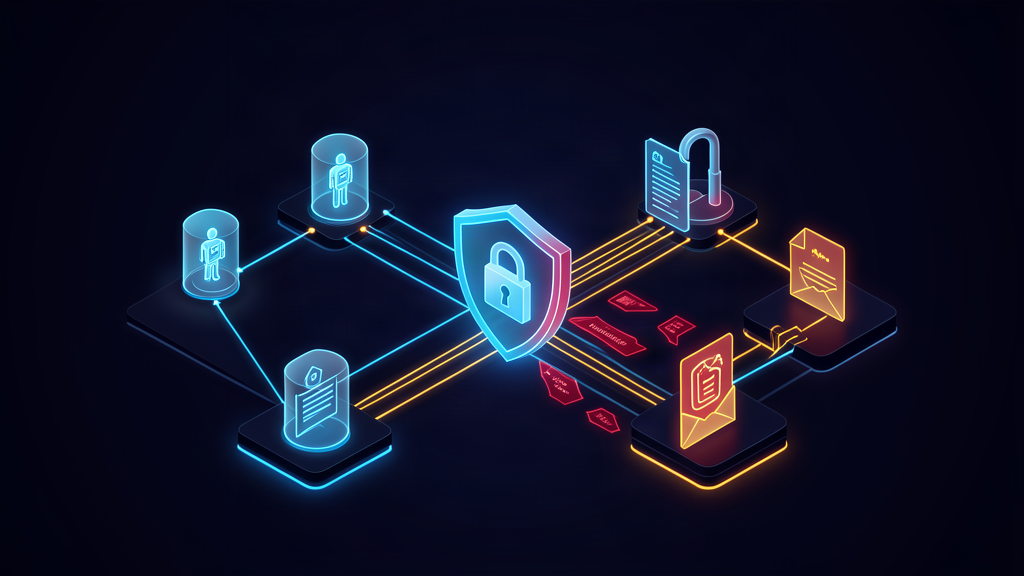
Enterprise AI agents operate with guardrails that constrain their behavior. These guardrails define what the agent can and cannot do, which tools it can access, what data it can read, and what decisions require human approval. Guardrails are not optional — they are the difference between a useful tool and a liability.
NVIDIA NeMo Guardrails, Guardrails AI, and custom policy engines are the leading solutions. The most effective deployments layer multiple guardrail types: input guardrails (reject harmful or out-of-scope requests), output guardrails (validate responses before delivery), and action guardrails (require human approval for high-risk operations).
Common Pitfalls and How to Avoid Them
The enterprise AI landscape in 2026 is littered with failed deployments. Understanding why they failed is as important as understanding why successful ones succeeded.
The Black Box Problem
Many early enterprise AI deployments failed because agents operated as black boxes. When an agent made a wrong decision, there was no way to trace why. The fix is comprehensive observability: every agent decision, tool call, and state transition must be logged with enough context to reconstruct the agent reasoning.
OpenTelemetry-based tracing, structured logging, and agent-specific monitoring tools (LangSmith, Weights and Biases Prompts) are now standard in production deployments. If you cannot explain why your agent made a decision, you cannot deploy it in a regulated environment.
The Hallucination Tax
AI agents hallucinate — they invent facts, imagine tools that do not exist, and make up API responses. In 2025, this was a showstopper. In 2026, the solution is multi-layered: structured output schemas force agents to produce valid data, retrieval-augmented generation (RAG) grounds responses in verified sources, and tool-calling frameworks validate every external interaction before reporting results.
The most effective pattern is show your work. Enterprise agents are configured to output their reasoning chain alongside their final answer. If a human reviewer spots an error, they can trace back through the agent reasoning to find the root cause.
The Pilot Purgatory Trap
The most common failure pattern in 2026 is the pilot that never reaches production. Teams build impressive demos but cannot make them reliable enough for real-world use. The root cause is almost always insufficient investment in the operational layer — monitoring, error handling, rate limiting, authentication, and rollback procedures.
The fix is to treat the operational layer as a first-class deliverable from day one. Before writing a single line of agent logic, define how the agent will be monitored, how failures will be detected and handled, and how the system will be updated without downtime.
The Business Case for AI Agents in 2026
The economics of enterprise AI agents have shifted dramatically. In 2024, deploying an AI agent cost $50,000-$200,000 in initial development and required a dedicated ML team. In 2026, the cost has dropped by an order of magnitude. Pre-built agent templates, managed orchestration services, and foundation model API price reductions have made AI agents accessible to mid-market businesses.
For a typical mid-market enterprise in the GTA, a well-scoped AI agent deployment costs $5,000-$15,000 in initial development and delivers ROI within 60-90 days. The most common ROI drivers are labor cost reduction (30-50% automation of routine tasks), error reduction (AI agents do not make data entry mistakes), and throughput increase (agents work 24/7 without breaks).
Measuring Success
Enterprise AI agent deployments should be measured against specific, quantifiable metrics:
- Task completion rate — What percentage of assigned tasks does the agent complete without human intervention? Target: 85%+ for production deployments.
- Average handling time — How much faster does the agent complete tasks compared to human workers? Target: 3-5x improvement.
- Error rate — What percentage of agent actions require correction? Target: under 2% for well-scoped use cases.
- Human escalation rate — How often does the agent need to hand off to a human? Target: under 15% for mature deployments.
How Tech Hub Services Builds Enterprise AI Agents
Tech Hub Services brings together deep expertise in software engineering, AI/ML, and enterprise systems integration. Our team has built and deployed AI agents for businesses across the GTA, from customer service automation to complex data pipeline orchestration.
Our approach is pragmatic and results-driven. We start with a discovery phase that identifies the highest-value, lowest-risk use case for AI agent deployment. We build a minimum viable agent in two weeks, measure results against baseline metrics, and iterate based on real-world performance data.
We handle the full stack: agent architecture design, tool integration, guardrail implementation, observability setup, and production deployment. Our clients get a working AI agent, not a proof-of-concept that gathers dust.
Ready to explore how AI agents can transform your business operations? Contact Tech Hub Services today for a free consultation. Let us talk about your specific use case and build a deployment plan that delivers measurable results.