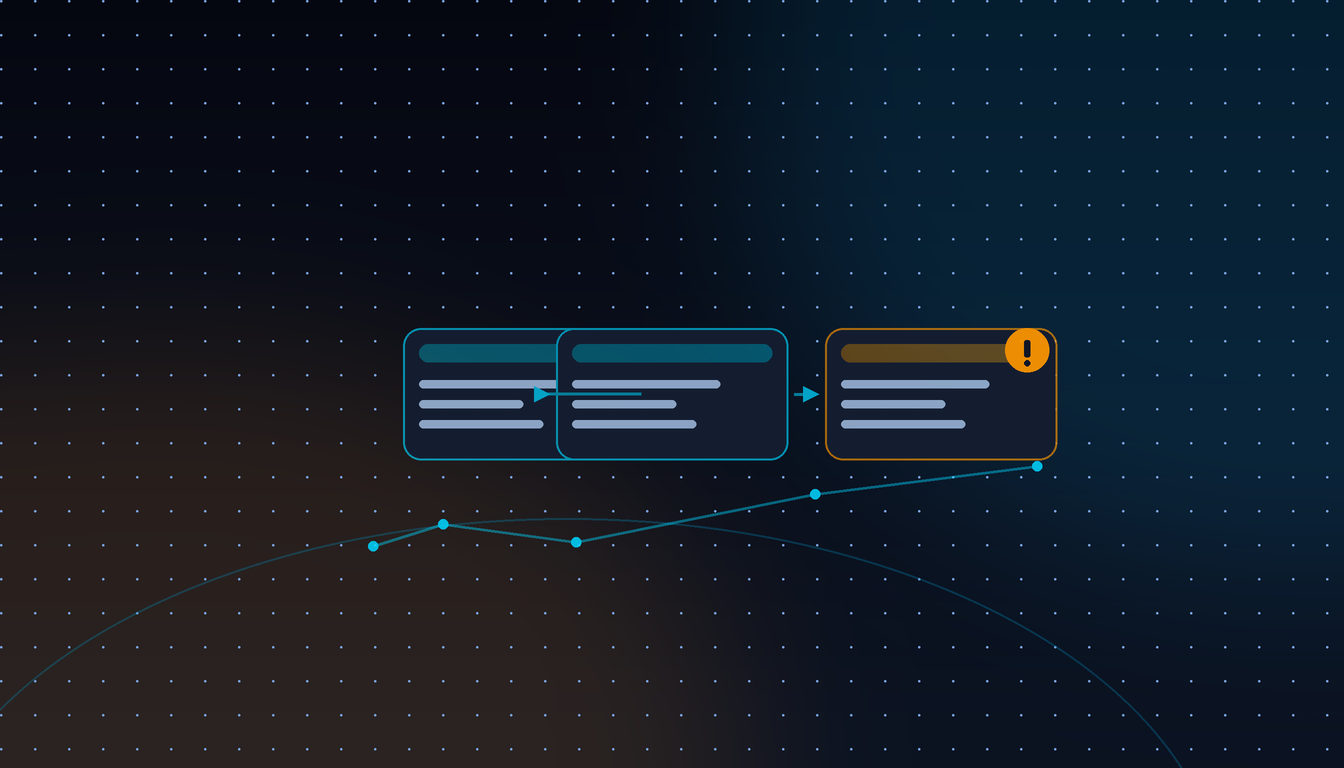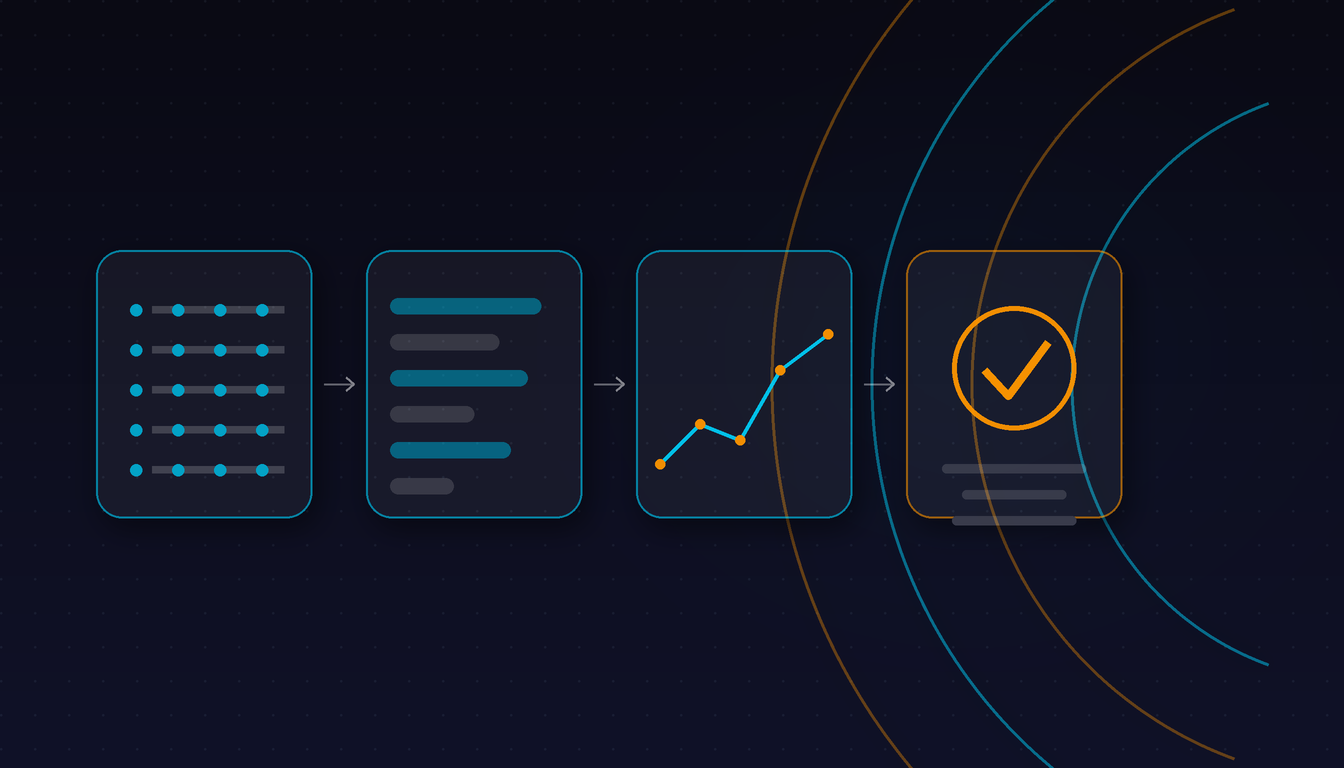


Something changed in online retail over the past year, and it was not a redesign of the checkout page. Shoppers started letting AI agents do the shopping. They open ChatGPT or Google's AI Mode, describe what they want in a sentence, and the agent returns a shortlist, compares options, and in some cases completes the purchase. The customer never opens a tab with your logo on it.
The uncomfortable part for most enterprise stores is not the technology. It is that their catalog is invisible to it. If an agent cannot read your product data, your products do not make the shortlist, and no amount of homepage polish changes that. Agent-readiness is a data and integration problem this year, not a marketing one.
What agentic commerce actually changes
Traditional e-commerce is built around human attention. Banners, filters, urgency badges, and hero images all exist to influence a person scanning a page. An agent does not scan. It queries structured data, checks it against the rules the shopper gave it, and moves on. Most of the persuasive layer a merchandising team spends its budget on never enters the decision.
The decision also moves earlier. On a normal funnel, a product is at least seen before it is rejected. With an agent, the rejection usually happens before any human sees the options. What decides it is a field check: is the price current, is the item in stock, does the delivery window fit the constraint the shopper handed over. Fail that check and you are not in the conversation at all.
That changes what conversion optimization means for a catalog. The storefront matters less than the accuracy of the feed behind it.
Three standards, three layers
The industry spent 2026 arguing over which protocol would win. That framing sends teams toward a bet they do not need to make. Three standards now sit at three layers of the same transaction, and one purchase can touch all of them.
The Universal Commerce Protocol, or UCP, came from Google and Shopify in January 2026 with backing from Walmart, Target, Etsy, Wayfair, and a long list of payment networks. It owns discovery, cart, checkout, and post-purchase. Merchants publish a machine-readable profile at /.well-known/ucp and agents read it directly.
The Agentic Commerce Protocol, ACP, came from OpenAI and Stripe. It handles the checkout step inside an AI surface, using a Shared Payment Token so the agent never handles the buyer's card details.
Then there is AP2, the Agent Payments Protocol, which started at Google and is now governed by the FIDO Alliance. AP2 answers a different question from the other two: who authorized this purchase? It represents a transaction as signed mandates that prove the user consented to a specific checkout at a specific amount.
A single purchase might use MCP to read a catalog, UCP to build and confirm the cart, and AP2 to prove the payment mandate. The protocols stack. Teams that treat them as rivals waste a quarter building for the wrong layer.
The lesson hiding in Instant Checkout
The clearest signal from 2026 was also the least reported. OpenAI's Instant Checkout launched in September 2025 as the flagship way to buy inside ChatGPT, then quietly shut down in March 2026. Roughly five months, near-zero sales.
It is tempting to read that as the whole idea failing. It did not. ACP survived as a protocol. What died was the assumption that shoppers want to finish a purchase inside a chat window. Discovery works. The transaction, at least in its first form, did not.
So separate discovery from checkout in your planning. Agents finding and evaluating products is already happening at scale. Handing the final payment flow to an AI surface is still unsettled, and it is the part most likely to shift under you. Build for discovery first, because the demand is already there, and keep your own checkout as a first-class path. Google's September 2026 update to its UCP integration hub added a cart-transfer option that hands an agent-assembled cart back to the merchant's own site. That tells you the market is not yet convinced the agent should own the last click either.
Product data is how agents see you
Every protocol here rests on the same foundation: clean, complete, machine-readable product data. The protocols differ in how they move that data. They do not differ in what they need to read.
The fields are not exotic. Title, description, SKU, brand, price with currency, availability, dimensions, weight, shipping and return terms, images. The failure is almost never a missing field. It is inconsistency. The price in the feed disagrees with the price on the page. A variant that exists in the warehouse is missing from the catalog. An item shows in stock that sold out that morning.
Agents do not overlook that the way a person does. A shopper might miss a stale price and buy anyway. An agent checking price, stock, and delivery against a rule will drop the listing and move on to the next merchant. Being selected comes down to reliability, not storytelling.
That is why a product information management system earns its keep now. One source of truth for attributes, variants, and languages keeps the feed from drifting away from reality. When product data is split across a spreadsheet, an ERP, and three channel integrations, every agent feed you run is another chance to publish something wrong.
What agent-ready really requires
Readiness is more mundane than the protocol names make it sound. A few capabilities have to work at the same time.
- A complete, variant-level feed that matches the storefront. Agents buy specific variants, not product families, so a feed that flattens variants leaves the agent with nothing to choose.
- On-page structured data alongside the feed. Schema markup and merchant listing markup describe the commercial details on the page, and they give an agent a second source to check the feed against. Google recommends running both because each one covers gaps in the other.
- Live price, stock, and delivery. A feed rebuilt once a day cannot serve a store whose inventory moves every few minutes. How often your commercial data refreshes has to match how fast it actually changes.
- Controlled APIs for catalog, cart, and order functions. Some agents query your catalog directly instead of reading a page. Without an API-first commerce stack, serving them means building a custom integration for each agent that shows up.
- Explicit authorization and an auditable record of payment. Once an agent can spend money, consent stops being theoretical. Scoped permissions, spend limits, and a log of what the agent did on whose behalf are the entry fee.
The teams that get this right usually already treated their catalog as infrastructure. The ones that struggle are the ones finding out in 2026 that their product data was never as clean as they assumed.
Measurement is still unsolved
Nobody has fully solved attribution for agent-driven sales. When the purchase happens inside an interface you do not control, the session data you depend on does not exist. No referral, no click path, no funnel to inspect.
The field is starting to move. Google's AI performance insights in Merchant Center, generally available in several markets by September 2026, compares a brand's share of voice against similar brands across AI surfaces. It is the first vendor-supplied measurement of agentic visibility that is not a paid-media report, though the figures come from Google and are not independently audited.
Budget for a long runway. Realistic attribution is an 18-to-24 month project. The merchants building the plumbing now will be able to prove return when it matures. Everyone else will be guessing.
A practical order of operations
Do not start with a protocol decision. Start with the data.
- Fix the catalog. Get one source of truth for attributes, variants, pricing, and availability. That work pays off whichever protocol wins.
- Publish structured data and a merchant feed. On-page markup plus a feed gives agents two consistent sources.
- Make the commercial data live. Wire price, stock, and delivery to refresh at the speed the business changes.
- Expose controlled, agent-ready APIs for catalog and cart, behind clear authentication and rate limits.
- Then map protocols by tier. A mid-market store on a major platform may get most of the way through configuration alone. An enterprise on a custom stack needs an adapter layer that speaks to UCP, ACP, and AP2 without rewriting core commerce logic every time a standard shifts.
- Keep a human handoff. Every autonomous flow needs a clean path back to a person, for a CAPTCHA, a missing field, or an order that trips a fraud rule.
The window is open now
Agentic commerce is not a 2030 forecast. It is a channel that exists and is being wired into production systems today. McKinsey projects it could reach $3-5 trillion globally by 2030, and Morgan Stanley's survey work suggests agents could touch a tenth to a fifth of e-commerce spend. Treat the exact figures as directional, since counting methods vary widely, but the direction is not seriously disputed.
Merchants moving now are not betting on a winner. They are doing the unglamorous infrastructure work that makes a catalog readable, accurate, and transactable no matter which surface the next shopper chooses. That work compounds, and the merchants who wait will spend 2027 catching up on product data they could have cleaned up this year.